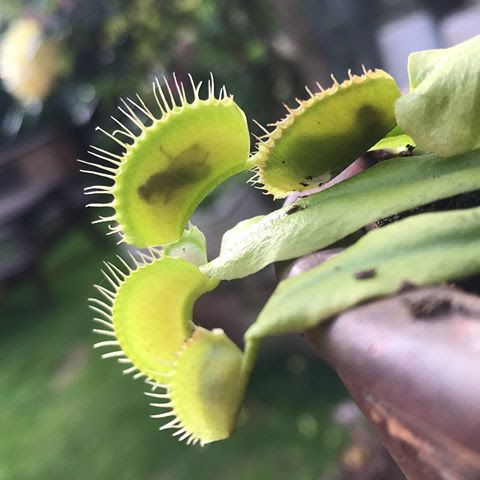
Dionaea muscipula
Contents
- Top Tips
- Location, Water, Humidity & Fertilisation
- Dormancy Care & Achieving Perennial Flowers
- Common Issues
- Origins, Temperature, Propagation, Repotting & Toxicity.
Need the answer to a specific plant query? Book a 1-to-1 video call with THE HOUSEPLANT DOCTOR™, the website's friendly author, to overcome and address your niggling problem! Available on iMessage, WhatsApp, Facebook Messenger & more.
Top Tips & Info
- Care Difficulty - Moderate
- Continual soil moisture is mandatory all of the time. Venus Fly Traps originate from bogs and marshes, meaning that periods of droughts must be averted. Mist the foliage weekly to replicate its natural habitats.
- Keep your carnivorous plant in a sunny windowsill; the more sun, the better! Avoid placing one more than 50cm from a window as this will result in the plant rotting after a month or so.
- Feed one insect (dead or alive) per fortnight, reducing this to monthly in the winter months. Do not give the plant any houseplant fertiliser as this will burn the roots and kill the overall plant within ten days. If you can't feed your Venus Fly Traps with insects, you can safely grow them outside in a shaded area between the spring and summer months, before brining them back indoors by October.
- Repotting is a rare practice for Venus Fly Traps, as their root systems tend to be quite thin and small. If you must repot it, only ever use a 'Carnivorous' labelled potting mix and NOT generic 'Houseplant' labelled compost as this will lead to root burn and eventual plant death. Unfertilised coconut coir potting mixes are also acceptable for carnivorous plants.
- It's entirely normal your Venus Fly Trap to have lots of yellowing or browning leaves during the autumn or winter. They're naturally from the northern hemisphere, so seasonal changes to its appearance is fine!
- This plant is perfect for carnivorous-themed terrarium or display due to the benefits of a closed environment. Why not plant-up other carnivorous plants like Pitcher Plants or Monkey Traps? (Please note that you must only keep insect-eating plants in a 'Carnivorous' labelled potting mix).
- Notice a tall stem coming from your Venus Fly Trap? These are its flowers which will last around two weeks and can be self-pollinated, too!
Location & Light - 🔸🔸🔸🔸
As Venus Fly Traps originate from nutrient-deficient bogs in North America, the only energy that the plant will receive is from the sunlight and eventual insects caught. With this in mind, you must choose a windowsill that offers some sunlight throughout the day. An east, south or west-facing room is best, with conservatories being the best choice.
If you're struggling to find a windowsill that's sunny enough, you can always purchase a growlight that'll provide the needed light for healthy growth. Have a look at the image below for an idea of what you could purchase.
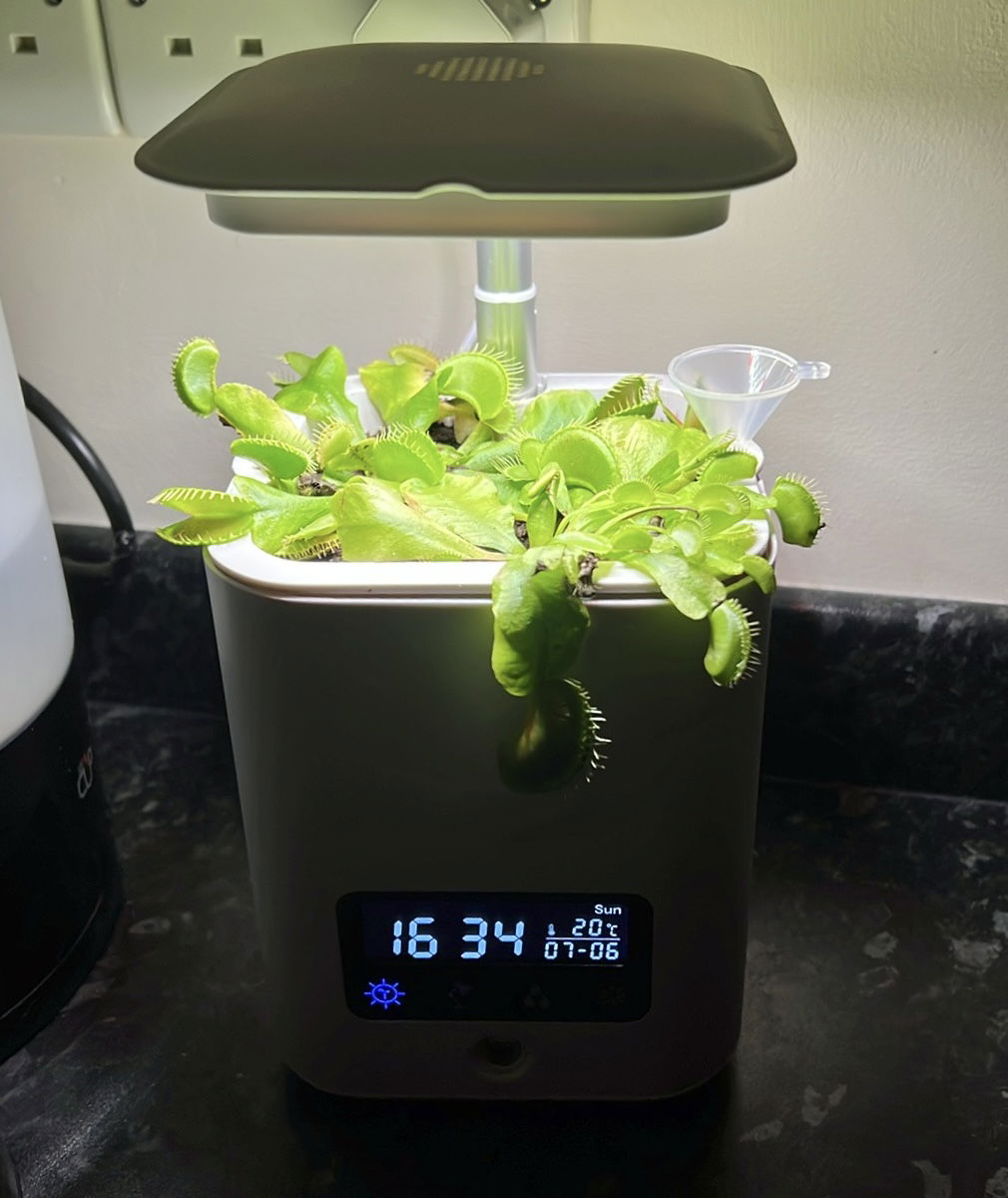
Venus Fly Traps grow exceptionally well under grow-lights. This product above has a self-watering mechanism to complement the plant's need for a constant source of water.
Can Venus Fly Traps Grow Outdoors?
Yes! It's very beneficial to place them outside during the spring and summer months (while the nighttime temperatures are above 10⁰C (50⁰F). Even though Venus Fly Traps love sunlight indoors, it's important to keep them in a sheltered location while they're outside as the sunlight is more intense than behind windows. Keep the soil moist and allow the plant to catch its own prey; you'll be shocked at how efficient these insect-eating plants are!
Water - 🔸🔸🔸🔸
You must keep the wet moist at all times. Venus Fly Traps can only survive around six hours in dry soil before damage starts to occur in the roots (and then in the leaves). Carnivorous plants are one of the only plants (along with Boston Ferns) that can be stood in a pool of water 24/7, which is a great way to ensure they never dry out.
Which Types of Water Are Best for Venus Fly Traps?
- Rainwater (dirty looking water is fine!)
- Deionised water
- Distilled water
- Water from a dehumidifier.
If you don't have access to these waters, try boiling tap water and sitting it on the side for 12 hours, before running it through an aquatic or Brita-style filter.
Which Is The Worst Types of Water? Do NOT Use:
- Pond water (high in nitrates (fish excrement), which can damage the roots)
- Bottled mineral or spring water (or if it's high in lime).
Humidity - 🔸🔸🔸
Venus Fly Traps love humidity as it'll reduce the risk of dehydration-related damage to its leaves. Although pebble trays are a good way to increase humidity, the atmospheric moisture generated by constantly-moist soil should provide enough humidity around its foliage.
Fertilisation -
Many people panic over what to feed their Venus Fly Trap. Natural prey like spiders, flies, mosquitoes and even baby frogs are the only 'food' that they should digest. Never feed them cake, meat or stones as this will burn the individual trap or even spell the end of the plant's life.
There are a few ways in which you can entice an insect into a trap, with the first being as simple as keeping the Venus Fly Trap outside. This species is in fact hardy, meaning it can survive in temperatures around freezing and will catch its prey as and when nature strikes. If you're only interested in keeping your Venus Fly Trap indoors, THE HOUSEPLANT DOCTOR™ recommends feeding either tropical fish food flakes, dead flies or refrigerated flies.
How to Feed Your Venus Fly Traps
Step 1: Food Sources to Choose From:
- Tropical fish food flakes - Available to purchase at all aquatic stores & online. Ensure that you only feed your Venus Fly Trap a maximum of three flakes per month. The flake must only be around 1/4 of the size of the trap itself, as it won't be able to digest anything too big!
- Recently killed bugs - Whether it's a house fly, fungus gnat or spider, your Venus Fly Trap will love it. As long as the bug is still fresh and it's less than 1/4 of the specific trap's size (that you're feeding), you can use it!
- Refrigerated flies - Tthis option sounds strange, but cold flies are more docile and can easily be handled by humans to be deposited into a Venus Fly Trap. Again, ensure the fly is no larger than one-quarter of the trap's size. You can purchase refrigerated flies at all reptile stores.
Step 2: If the Venus Fly Trap has been fed by something that doesn't move (like a dead insect or fish food flake), it's important that you manually stimulate the trap my lightly pinching it with your index finger and thumb (three times, around 1 minute after it initially shuts) to trick the plant into thinking its caught a live insect. If successful, the trap will begin shut like a vacuum to absorb the soft tissue from the insect (see the image below). If, however, your plant caught a live critter, you won't need to massage the trap as the unfortunate guest will do the work for you (by trying to unsuccessfully wiggle out).
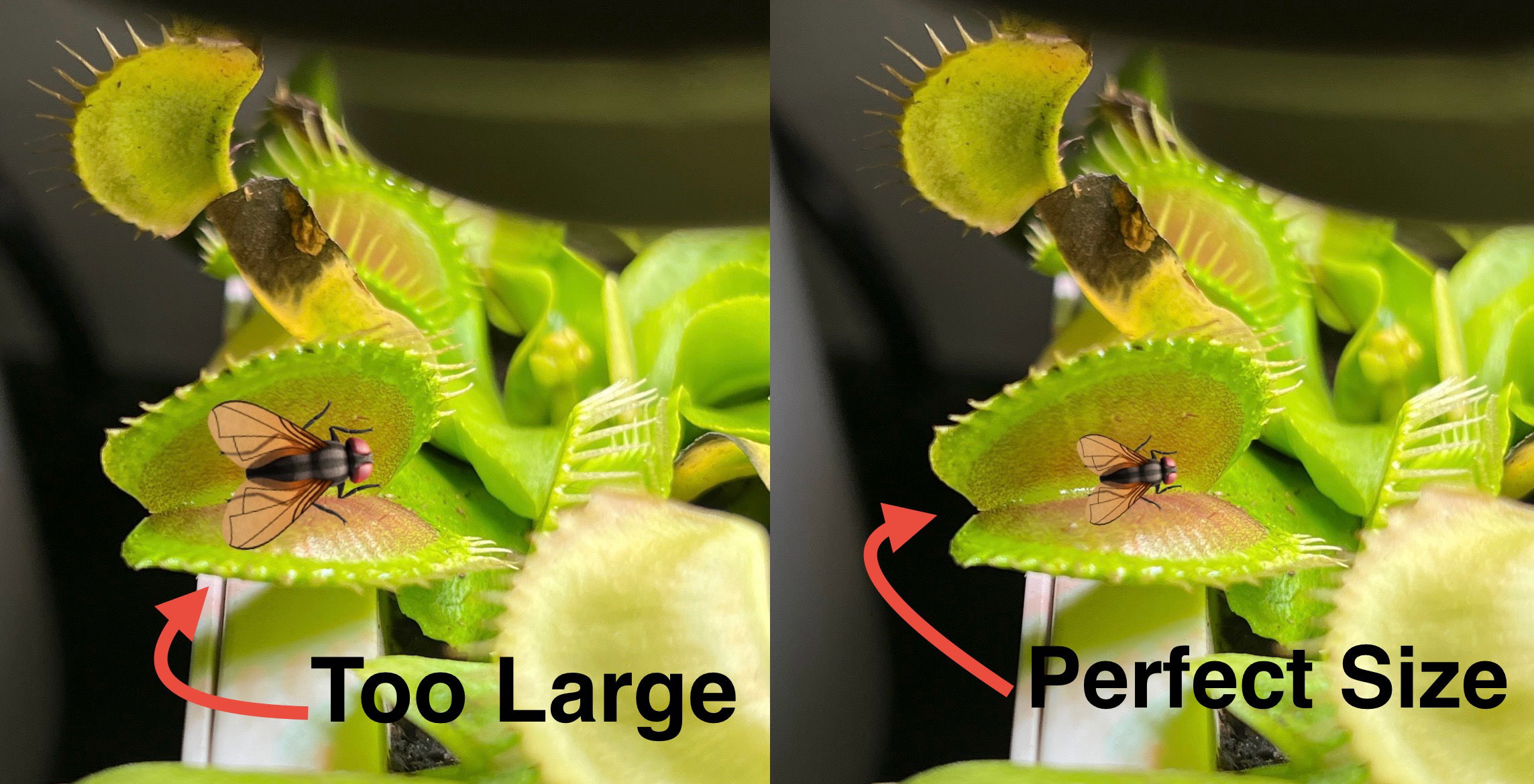 How big should the fly be for a Venus Fly Trap? Here is a visual guide on the maximum size a bug should be for an example. Never place anything larger than 1/4 of the trap's size as it won't shut and will cause the plant to use up vital energy. If, however, the plant naturally catches something too large, allow nature to take its course as it could result in damage if you prize the trap open...
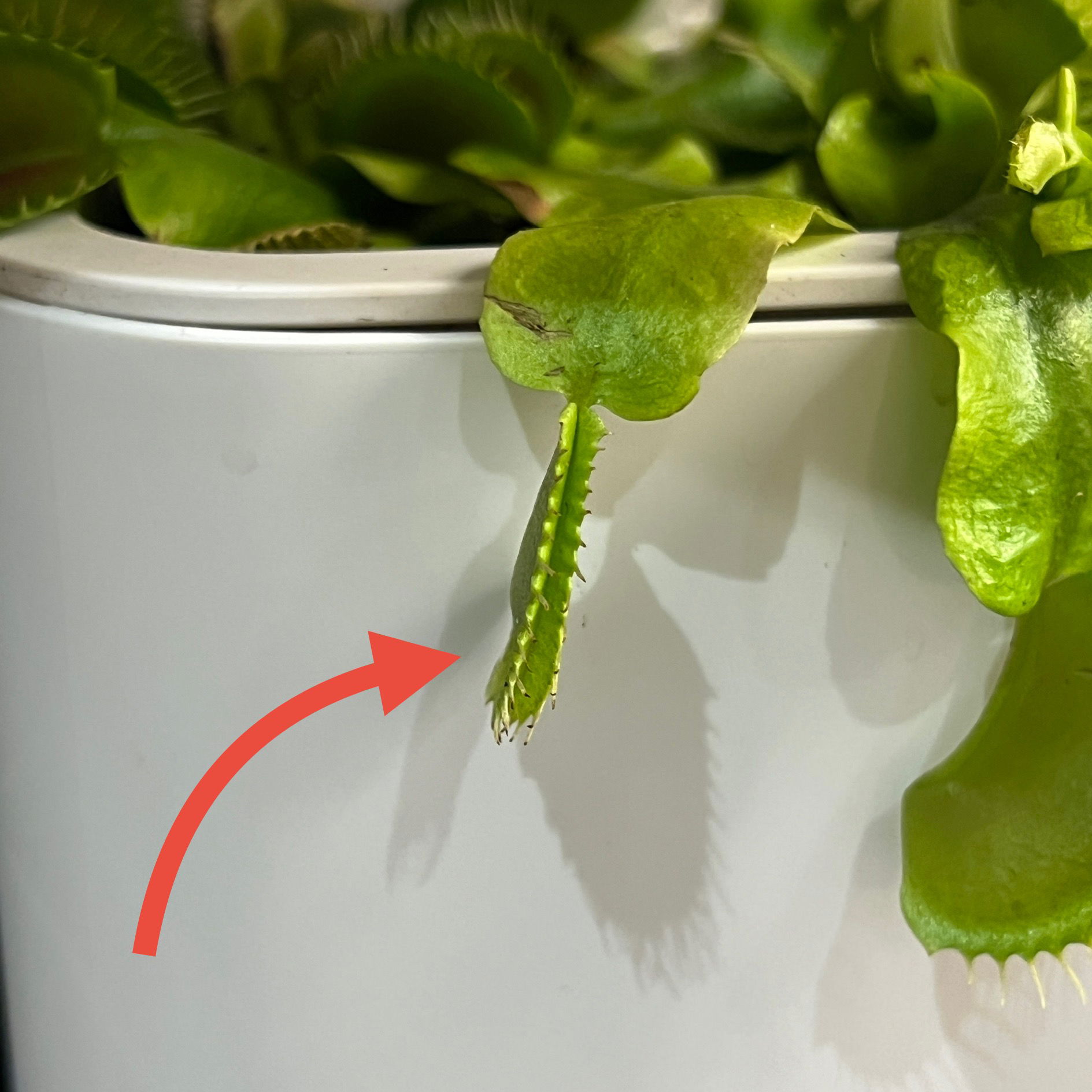
A Subtle Difference: We all know that a Venus Fly Trap will first shut when triggered, but if the plant senses a successful catch, it'll force a vacuum around the insect within the trap. You'll know when it's doing this as the lips of the Fly Trap will curl outwards, while the main trap remains shut - see the image above. If, however, Your Venus Fly Trap shuts but does not curl outwards, it means the trap has not sensed a bug and therefore will not secrete the digestive enzymes and will shortly reopen again.
Dormancy Care & Achieving Perennial Flowers with a Venus Fly Trap
The final element for a long-lasting carnivorous plant is a vital resting period during the autumn and winter months. While keeping the soil moist all year-round, reduce insect-feeds to around once a month, as in the prey in its natural habitat tend to be less in numbers during this time. If possible, relocate your plant to the coldest room with a windowsill. Don't worry about it being too low, as Venus Fly Traps can survive down to temperatures below freezing. Keep the soil moist throughout the autumn and winter and wait for new growth to emerge in the spring.
A well-rested Venus Fly Trap will produce a tall stem with white flowers that can be self-pollinated with a Q-Tip or small paint brush. Scroll down to 'Propagation' to learn more about this!
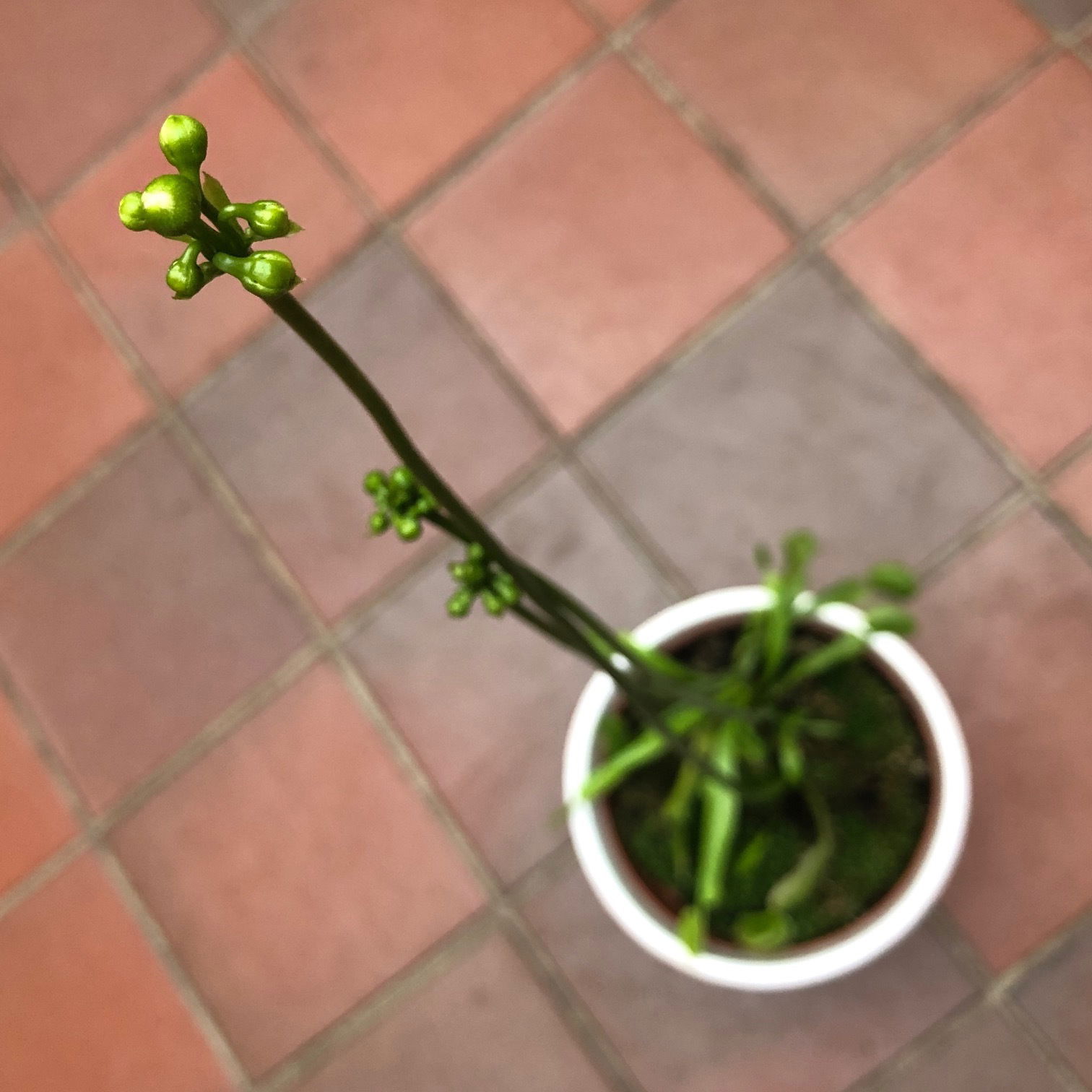
What is this long stem growing from my Venus Fly Trap? Don't panic; these are just its flowers that'll emerge and open up around 30cm above the plant! If you're not too bothered about its blooms, you can cut the stem off around 3cm (1in) above the soil to allow it to conserve energy for leaf production.
Common Issues with Venus Fly Traps
Too little light accompanied by water-logging will cause the lower leaves to rapidly yellow and rot. Although this is a natural response to ageing on a smaller extent, persistent yellowing and a near absence of foliage should only occur during the winter. If this is the case during the height of summer, action must be taken immediately. Place the Traps in a location that receives little direct sunlight out of peak hours, or outside if possible. Although it will take several weeks for the plant to start to recover, better-growing conditions with the occasional insect will significantly benefit its overall health. Other causes for yellowing leaves are sun-scorch or the use of a non-carnivorous potting mix. Venus Fly Traps must not be repotted into any other compost, as the chemicals will quickly lead to root-burn and inevitable death.
Alternatively, too much sunlight will lead to sun scorch, with typical signs including browning or crispy leaves, dry leaf-edges, sunken leaves or stunted growth. This is very rare to occur as Venus Fly Traps can tolerate a lot of sunlight when kept indoors. Remove any dead or burnt leaves and maintain moist soil to encourage fresh growth within the next six weeks.
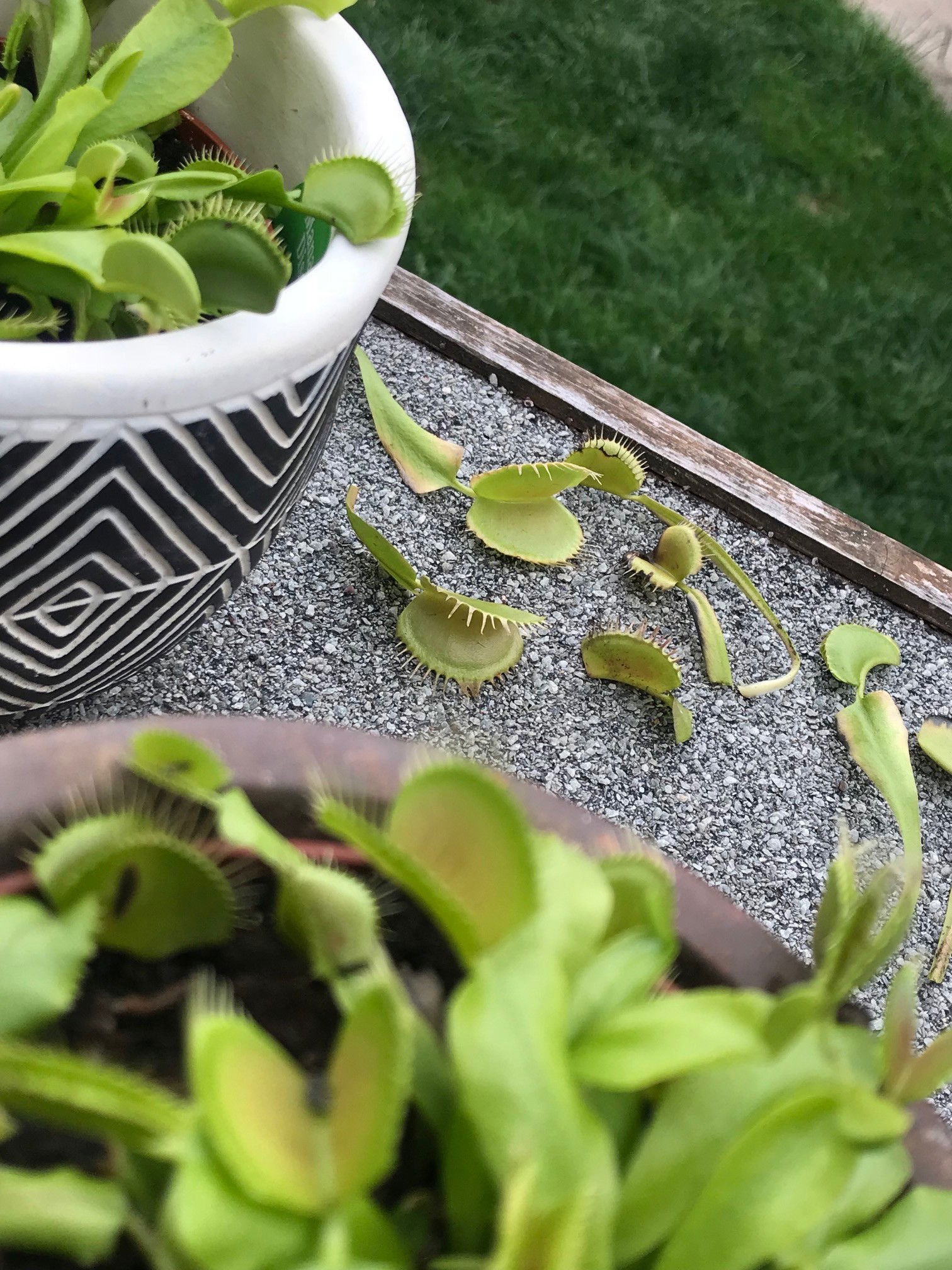
Should I prune off the yellow leaves from my Venus Fly Trap? No. Keep them attached until the leaves turn brown and crispy (as the plant can re-absorb vital nutrients from them to reinvest in new growth).
Aphids can occur on the flowers and young leaves as they emerge.Try not to panic as Aphids (& Greenflies) rarely cause Venus Fly Traps to die. The best course of action to remove them is by pinching/crushing the bugs you can see, before spraying garlic water onto the affected areas once every three days for around twelve days in total. To make this product, boil a garlic clove for around fifteen minutes in 300ml of water, before misting it on the plant once it cools.
Under-developed or deformed traps are caused by persistent under-watering or too much sunlight. Dry soil must be avoided at all times for success as they grow naturally in bog climates across the Carolina states. After around six weeks of reliably moist soil, better growth should start to develop. To avoid future droughts, you can either keep the Venus Fly Trap submerged in water (around 20% in depth of the pot), or by planting it into a self-watering container.
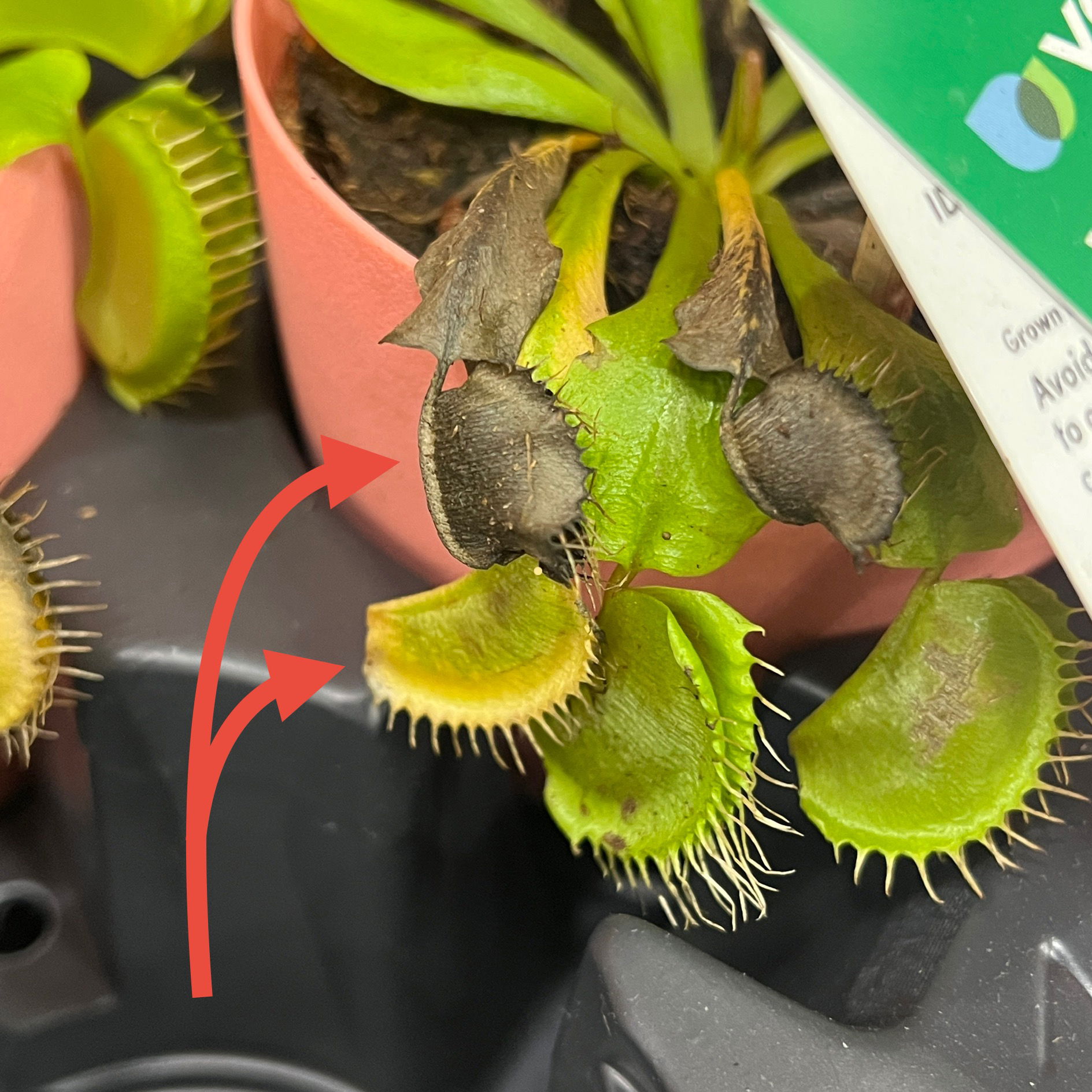
Sudden yellow or brown leaves can be caused by dry soil or nearby operating radiators. Ensure the soil is kept moist at all times and the plant is at least 2m from a radiator. Venus Fly Traps can tolerate cooler temperatures down to around 10⁰C (50⁰F), so don't worry about giving them warmth during the autumn or winter.
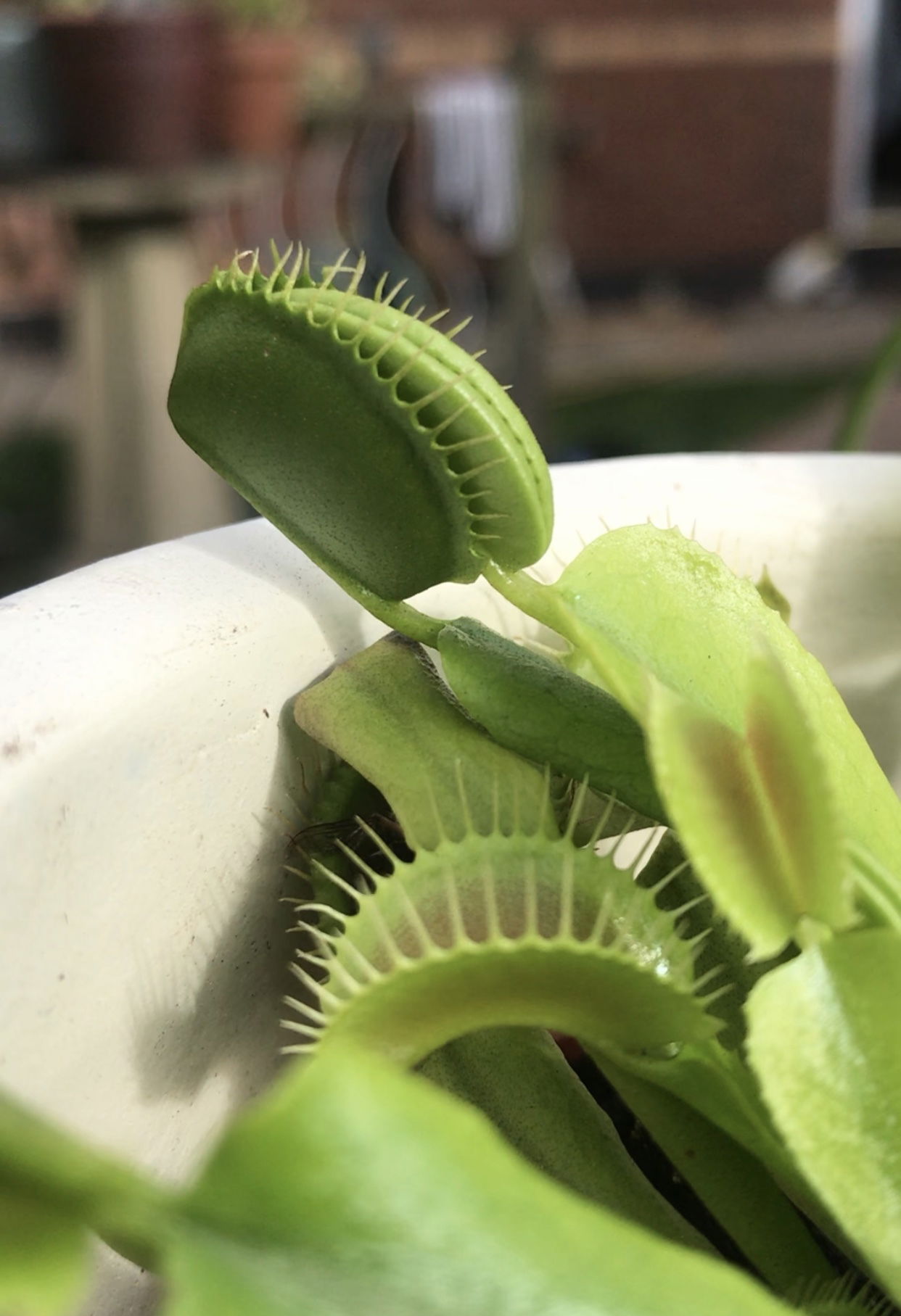
A funny scene where a juvenile Trap is developing between the jaws of its predecessor! On a serious note, if this happens to your Venus Fly Trap, THE HOUSEPLANT DOCTOR™ recommends dislodging the two as they'll block the light from each other (resulting in lower photosynthesis and overall plant health).
Origins
The earliest known document of the Fly Trap can be dated back to 1760, when the North Carolina colonial governor, Arthur Dobbs, penned a letter to English Botanist, Peter Collinson stating about the fascinating fauna in his state. In the letter, he names them as Fly Trap Sensitive, referring to a pre-scientific evaluation of the species.
The genus, Dionaea, received its formal classification back in 1773 by Irishman, John Ellis, who used the Greek word for 'Goddess' (Dione) - this is also where its nickname of Venus' Fly Trap' originates from. 'Muscipula' can be translated from Latin to mean 'mousetrap' ('mus' & 'decipula').
As fewer than 33'000 specimens remain in the wild, the NWF has classified the species as vulnerable, three stages away from extinction. In 2014, the state of North Carolina ranked the theft of naturally-occurring specimens as a punishable crime. Venus Fly Traps have had many medical uses over the years, most notably for human ailments of HIV, Crohn's disease and even skin cancer in some instances. (This is not medical advice & purely for historical educational purposes).
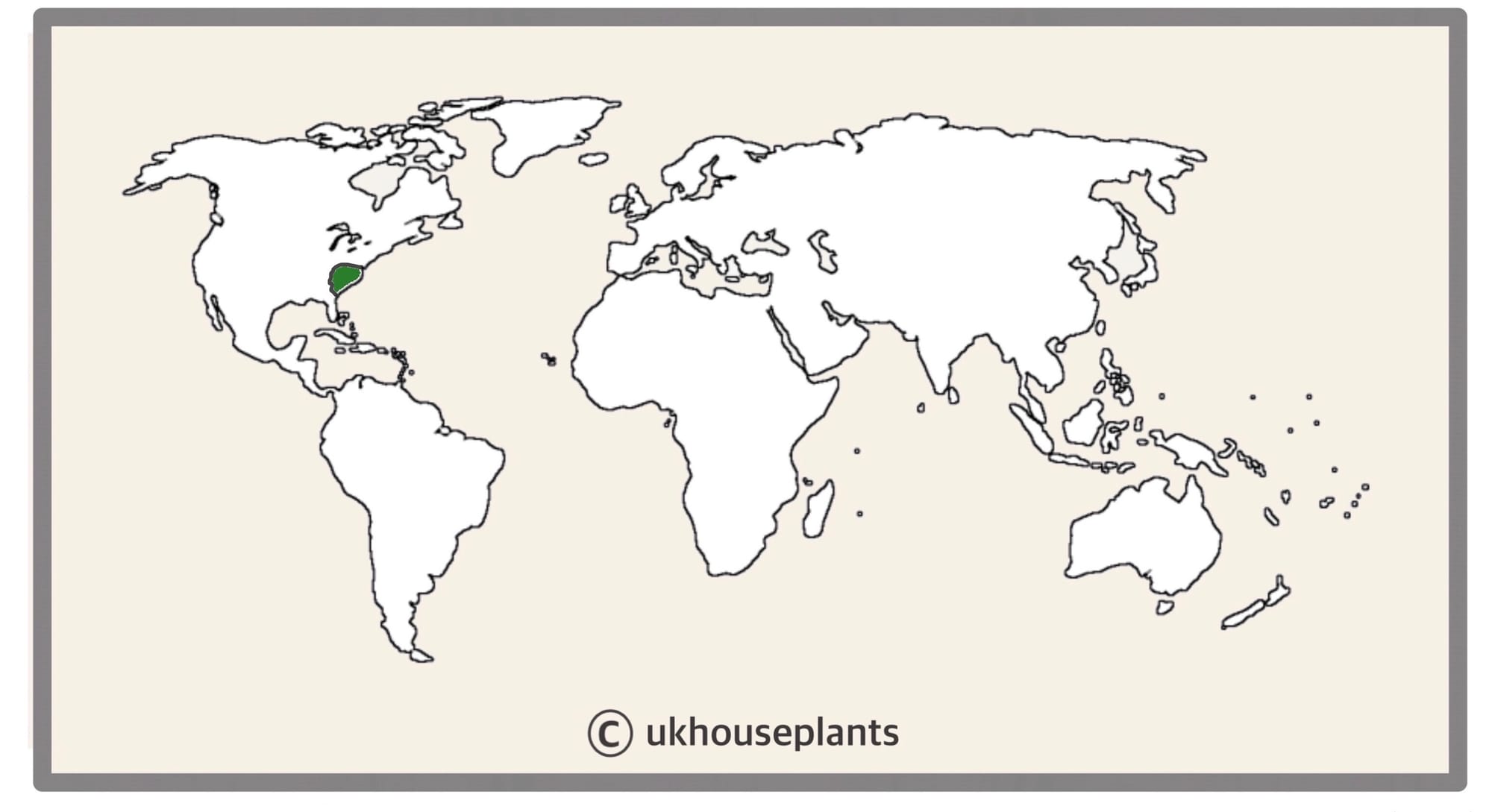 The Distribution of Venus Fly Traps
How Do Venus Fly Traps Work?
As their natural boggy habitats in North/South Carolina lack nitrogen and phosphorus, evolution has served them the ability to catch and digest small insects to compensate for the deficiencies. Two trichomes (little hairs located on the inside of the traps) must be activated within twenty seconds for its mechanism to perform. If the plant doesn't detect any prey shortly after closure, it will reopen, using none of its stored enzymes to conserve energy. If the catch is successful, it'll typically take just under ten days for complete digestion, before fully reopening, revealing the victim's exoskeleton.
Temperature
H3 (Hardiness Zone 8 & 9) - Tolerate to temperatures below freezing. Although it can survive frosts and thin snow, refrain from bringing it indoors overnight if the room temperature is above 5℃ (40℉) as a sudden change in temperature may cause environmental shock. Instead, either leave it outdoors or in an unheated conservatory, brightly lit garage windowsill or a greenhouse. Regularly keep an eye out for pests like Aphids when re-introducing back indoors (especially during the spring). If yours is kept outside during the spring and summer months, ensure the plant's pot is constantly submerged in around 3cm (1in) of water to avoid drought and Venus Fly Trap death.
Spread
Over 10cm in height and 25cm in width once they reach maturity. The ultimate size will take around 5 years to achieve, but can survive for over twenty years in the right conditions. The flower spike will reach around 30m in height.
Pruning & Maintenance
Remove yellow or dying leaves, and plant debris to encourage better-growing conditions. While pruning, always use clean utensils or shears to reduce the chance of bacterial and fungal diseases. Never cut through yellowed tissue as this may cause further damage in the likes of diseases or bacterial infections. Remember to make clean incisions as too-damaged wounds may shock the plant, causing weakened growth and a decline in health.
Propagation
Via Seed or Basal Offset Division.
How to Self Pollinate A Venus Fly Trap (When It Flowers) (Easy) - Allow the plant to fully open its flowers (like the image below). Each flower is only fertile for a short time (usually the first 1–2 days), so begin pollinating as soon as you see the anthers releasing yellow pollen! While using a small, clean paintbrush (or Q-Tip), gently dab the yellow pollen from one anther (the small structures around the centre) and transfer it to the stigma of another flower. (You should see light yellow 'dust' on your tool). Do this multiple times (from the same anther and stigma) to ensure it's pollinated. If successful, the seed pod will close and turn green. It'll then turn brown and once it reopens slightly, check for the small black seeds to collect and sow in 'Carnivorous' labelled potting mix.
Seeds (Easy) - The only soil you can use is a 'Carnivorous' labelled compost, as other mixes will retain too many chemicals that'll burn the cases of the seeds. Set the seeds on top of the soil's surface, resisting the temptation to compact it. Maintain evenly moist compost and allow the excess water to freely drain from the pot's base to prevent water-logging. The ideal location for successful germination is in a bright, indirect setting with temperatures above 18℃ (64℉) with bottom-heat. Keep the pot in a transparent bag to provide a stable level of humidity, along with longer-lasting soil moisture. Germination may take up to three months, so don't discard any unsuccessful seeds until this threshold has been surpassed. Remove the bag once the seedlings produce their second leaf and then split them into a 7cm pot after a further month (still using 'Carnivorous' labelled soil).
Basal Offset Division (Easy) - Your plant will produce several basal offsets that can be separated once they have a sufficient root system, with the foliage's diameter surpassing 5cm. If possible, water the soil 24hrs before the main event to reduce the risk of transplant shock, when its dry root systems are over-fingered. Take the plant out of its pot and place your fingers close to the nodal junction - soil may have to be removed for better access. Push the chosen offset downwards until you hear a snap. Separate the foliage and its root system away from the mother plant, mentally noting the high risk of damage. Transplant in the appropriate sized pot with a fresh batch of 'Carnivorous' soil. Maintain evenly moist soil and situate it in a bright, indirect location away from any direct sunlight. After four weeks, treat it like a healthy specimen, following the care tips above!
Flowers
Venus Fly Traps will produce a cluster of white blooms at the top of a 30cm (12 inches) stem, that'll emerge from its centre. Although they'll naturally bloom in the very early spring, some specimens may flower twice in one year if the plant rests during the winter. Scroll up to the 'Dormancy Care & Achieving Annual Flowers' section for more information.
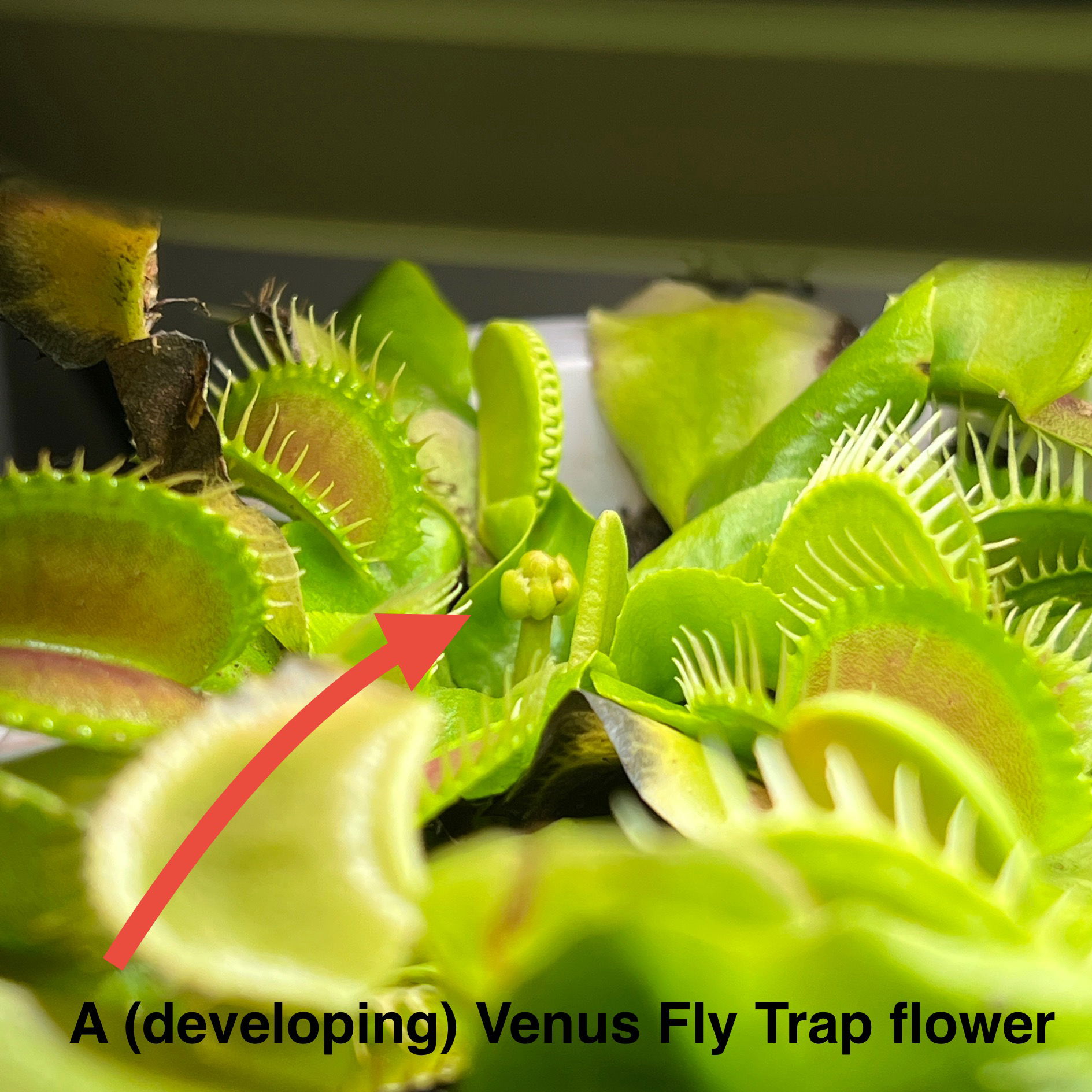 I've found a strange, ball-like growth emerging from my Venus Fly Trap? This is simply a flower head developing from the very centre of the plant. The flower stem will be around 30cm in height in a few week's time, where you can self-pollinate it with a Q-Tip! Extra Tip: If you'd rather let the plant focus its energy on leaves, feel free to snip off the flower stem at any point.
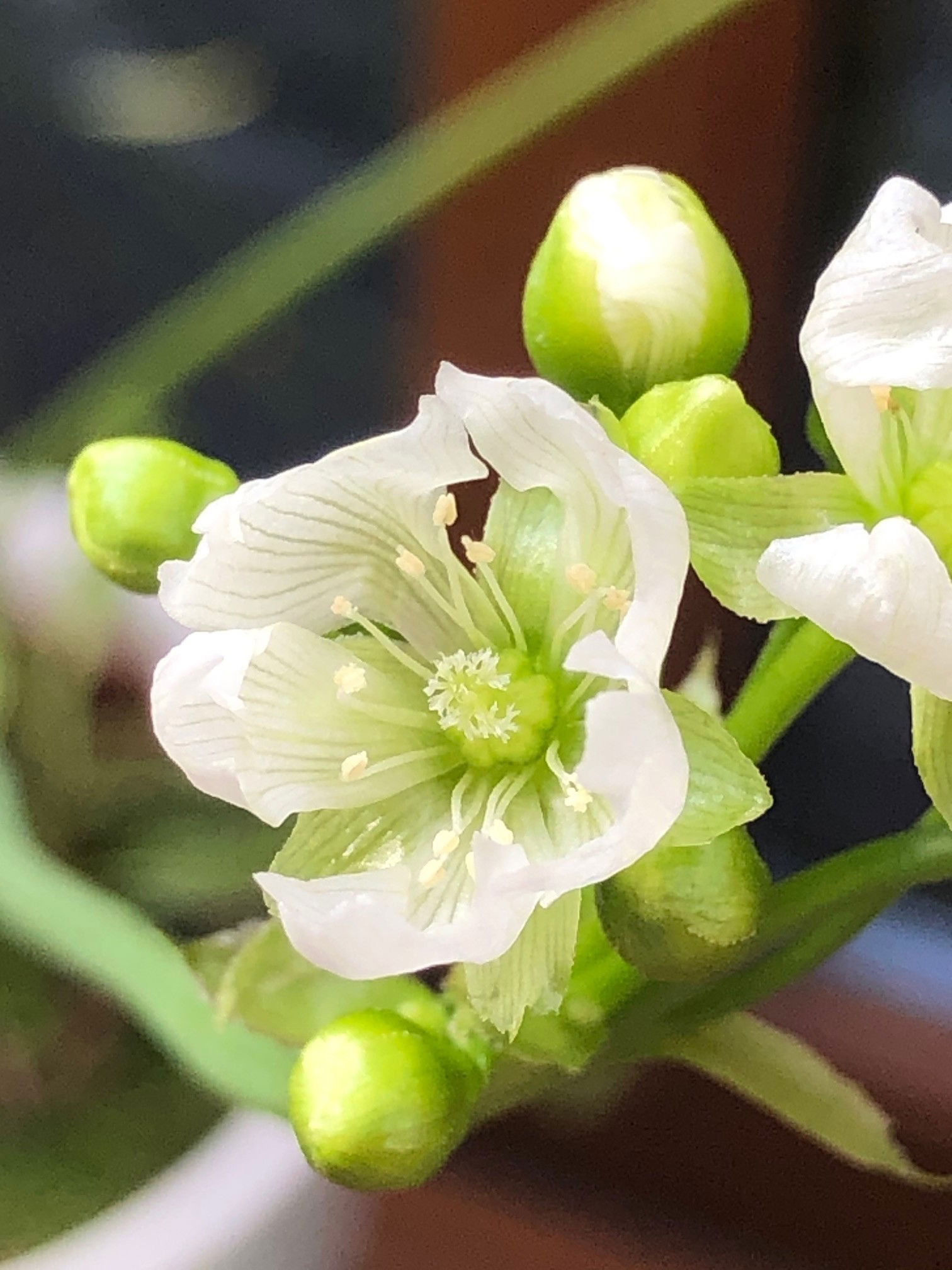 A close-up of the Venus Fly Trap's flower.
Repotting
It's extremely rare that you'll need to repot a Venus Fly Trap due to their small root systems. When you do come to repot it, you must only use a 'Carnivorous' labelled compost (like this one) and the next sized pot with adequate drainage holes in the bottom. Make sure to water the plant 24hrs before tinkering with the roots to prevent the risk of transplant shock.
Extra Repotting Tip: To get the very most out of your Venus Fly Trap (& to allow it to grow for years), we recommend purchasing a self-watering growlight (retails for around £20). You won't need to water the plant often (saving a lot of time) and you can directly plant into this set-up to enable the self-watering wick to work. Have a look at the photo in 'Watering' to see an example of this!
If you're still unsure of what to do, never hesitate to send us an email or direct message to get our expert advice on transplantation. Never use any other compost (like 'Houseplant' labelled potting mixes) as the chemicals typically found in these soils will burn the roots, killing the plant outright within a week or two.
Book a 1-to-1 video call with THE HOUSEPLANT DOCTOR™ if you'd like a personal guide to repotting your carnivorous plant. This will include recommending the right branded-compost and pot size, followed by a live video call whilst you transplant the specimen for step-by-step guidance and answer any further questions!
Pests & Diseases
Keep an eye out for mealybugs, aphids, spider mites, scale, blackfly, soil mites & root mealybugs that'll locate themselves in the cubbyholes and undersides of the leaves, with the exception of the latter two in the soil. Common diseases associated with Venus Fly Traps are root rot, leaf-spot disease, botrytis, powdery mildew & southern blight - click here to learn more about these issues.
Toxicity
Not known to be poisonous when consumed by pets and humans. If large quantities are eaten, it may result in vomiting, nausea and a loss of appetite.
Retail Locations
B&Q, Blue Diamond, British Garden Centres, Dobbies, Hudson's Plant Centres, IKEA, Online Stores.
Book a 1-to-1 Call with THE HOUSEPLANT DOCTOR™
If you need further advice with your houseplants, book an advice call with ukhouseplants' friendly and expert writer today! This can be done via a video or audio call on most apps, including Facebook, FaceTime & Skype. A ten-minute call costs £5.99 (US$7), or £15.99 for thirty minutes. You can ask multiple questions, including queries on plants, pests, terrariums, repotting advice and anything in between. Please consider supporting this service to keep ukhouseplants thriving!
Comments