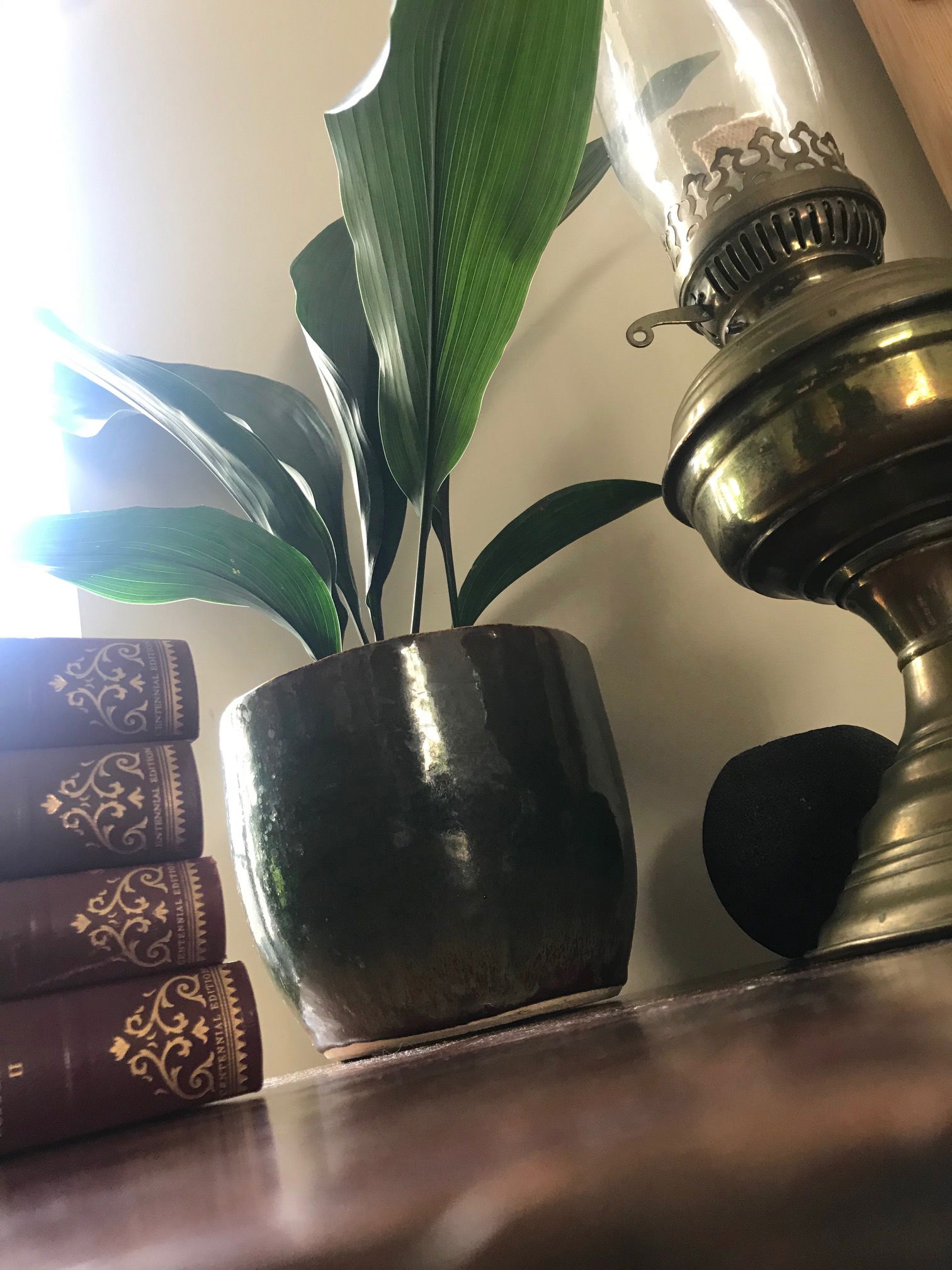
Aspidistra elatior
Contents
- Top Tips
- Location, Water, Humidity & Fertilisation
- Common Issues
- Origins, Temperature, Propagation, Repotting (includes addressing Root Rot) & Toxicity.
Need the answer to a specific plant query? Book a 1-to-1 video call with THE HOUSEPLANT DOCTOR™, the website's friendly author, to overcome and address your niggling problem! Available on iMessage, WhatsApp, Facebook Messenger & more.
Top Tips & Info
- Care Difficulty - Easy
- Aspidistra can withstand all levels of indirect light found in our homes. The best location is one between 1-2m from a window, or anywhere in a conservatory.
- Less is more when watering Aspidistra (Cast Iron Plants). Only water the plant once its soil becomes fully dry to avoid the common issue of root rot that plagues this plant.
- Fertilise using a 'Houseplant' labelled feed every third water, all year round.
- Repot every three years with either a 'Houseplant' or 'Aspidistra' labelled compost in the spring or summer months. Water the plant 24hrs beforehand, to reduce the risk of damaging the root hairs (transplant shock). This is a perfect time to propagate/split the rhizomes that lay around 3cm (1in) below the soil. .
- Fungus Gnats are common with Aspidistras if their soil is kept too moist. As long as you allow it to fully dry between waters, the issue of these pests will quickly subside (without the need to buy pesticides).
- Aspidistras are frost hardy, meaning that they can grow in temperatures down to -5°C (23°F), making them a great choice for cold windowsills, unheated conservatories or porch ways.
- Worried about Aspidistra root rot? Scroll down to 'Repotting' to see a photo example of what a healthy root system should look like...
Location & Light - 🔸🔸
Aspidistra can withstand all ranges of indirect light, meaning that most locations in a home will be accepted. Avoid situating it in a spot that receives intense sunlight for more than an hour, like a south-facing windowsill, as it'll quickly lead to sun-scorch and permanently damaged leaves.
The ideal location to grow one of these is between 0-3m (0-10ft) of a windowsill, or anywhere in a conservatory (due to the better lighting). Never place this plant within 1m (3ft) of an operating radiator as it may result in crispy leaves.
For Aspidistras grown more than 1m (3ft) from a window, THE HOUSEPLANT DOCTOR™ recommends wiping the topsides of every leaf with a warm watery cloth to remove the dust (every three months). This isn't mandatory, but it'll help with improving photosynthetic rates (& produced energy for the plant).
Water - 🔸
Due to the Aspidistra's amazing ability to withstand dry soil due to competition from other nearby plants in the wild, this species is fantastic at tolerating droughts. THE HOUSEPLANT DOCTOR™ recommends allowing the soil to fully dry out in between waters, all year round. They are better 'forgotten about' as supposed to being watered too regularly as root rot is a very common issue with Aspidistras.
When it's time to give your Aspidistra, keep pouring water equally throughout the soil until it starts to drain from the pot's holes below. Drain away any excess water down the drain (or in another plant pot) as these plants should not be kept in waterlogged conditions for any period of time.
Under-watering symptoms include stunted growth, browned leaf edges and yellowing leaves; these issues are commonly caused by too much sunlight or heat, or pure forgetfulness. Over-watering symptoms include a collapsed base, yellowing leaves, heavy soil and plant death. If you feel that over-watering is to blame for a gradual decline in health, be sure to click on this link for more info about addressing root rot.
Humidity - 🔸
The average humidity found in our homes will be perfectly suited for Aspidistras. If, however, your home is below 30%, THE HOUSEPLANT DOCTOR™ recommends creating a pebble tray to counteract the dry air.
Fertilisation - 🔸🔸
Nutritious soil is vital for a healthy Aspidistra. Use a fertiliser once every third water, all year round. An ideal product to use for this plant would be the Liquid Gold Leaf fertilisers found here.
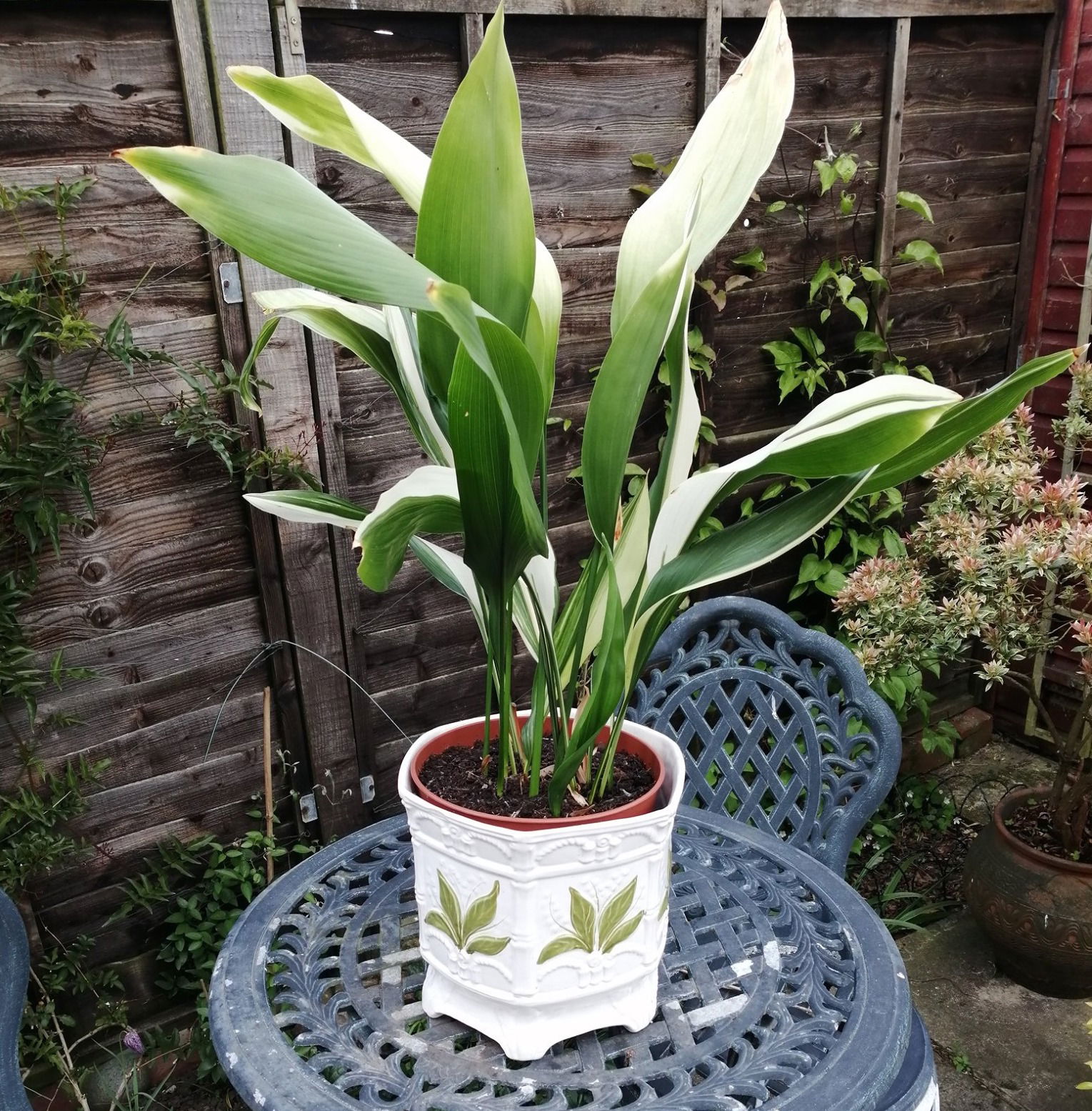 The specimen above is an Aspidistra elatior 'Variegata', sent in to us from Melanie Elliott who has grown the original cutting since 1978!
Common Issues with Aspidistra
Older leaves that rapidly become yellow are a clear sign of over-watering, usually accompanied by low light, mouldy soil and Fungus Gnat flies. Although this species can do well in darker locations, the frequency of irrigations must be reduced to counteract the chance of root rot. People don't realise that a plant's root system needs access to oxygen too; when soil is watered, the air will travel upwards and out of the potting mix. A lack of accessible oxygen will cause them to subsequently breakdown over the oncoming days. Scroll down to 'Repotting' to learn more about addressing root rot.
Other symptoms of root rot are a 'loose' plant that isn't fixed into the soil, yellowing leaves, no new growth and gradual decline. The soil may also smell 'earthy'. Scroll down to 'Repotting' to learn more about root rot, transplantation and a photo example of a healthy Aspidistra root system.
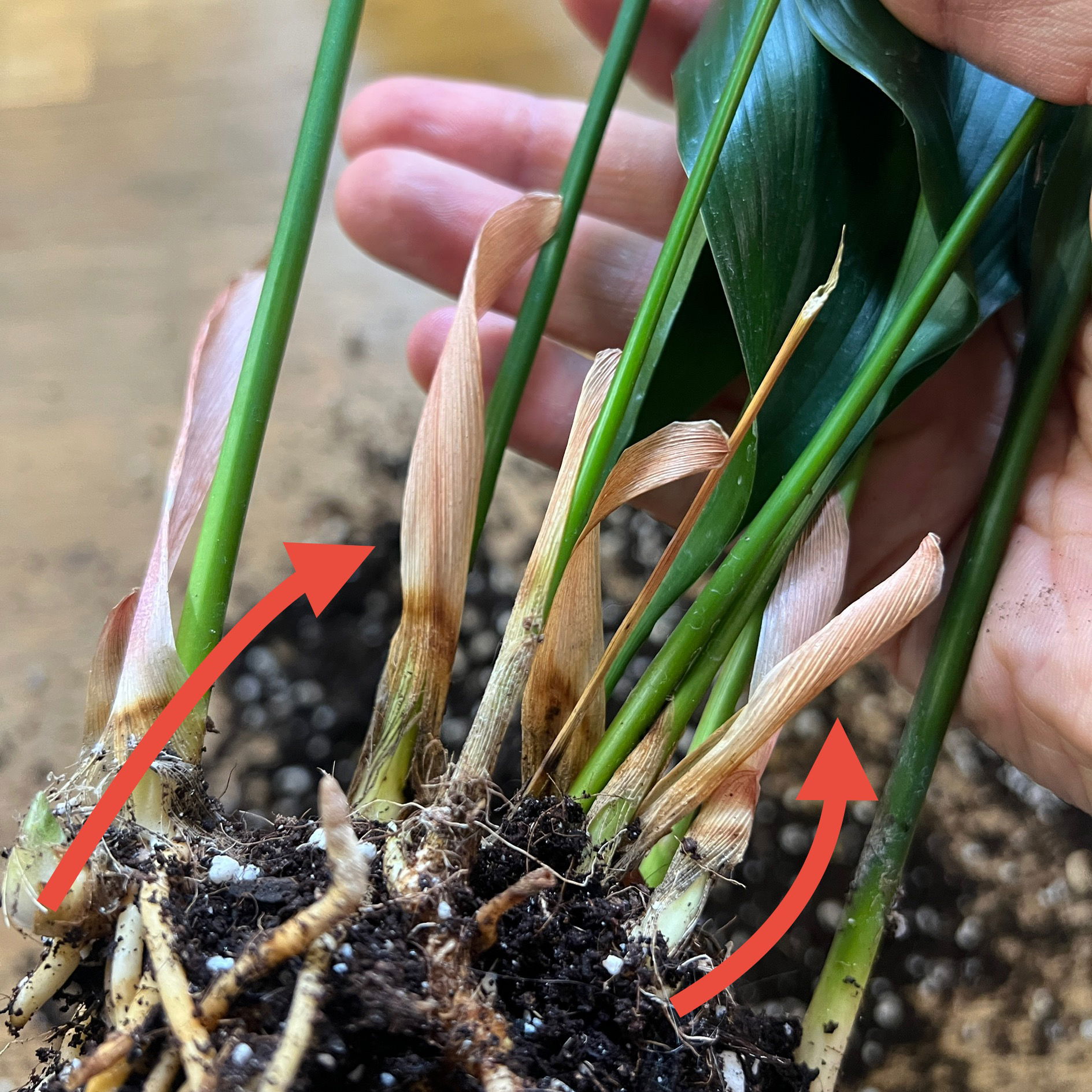 What are these brown small leaves at the bottom of my Aspidistra? These are known as 'cataphylls' which are modified smaller leaves that protect the early stages of a leaf's development. It's natural for the cataphyll to brown or crisp-over, and it's best to keep it attached to the plant to avoid damage!
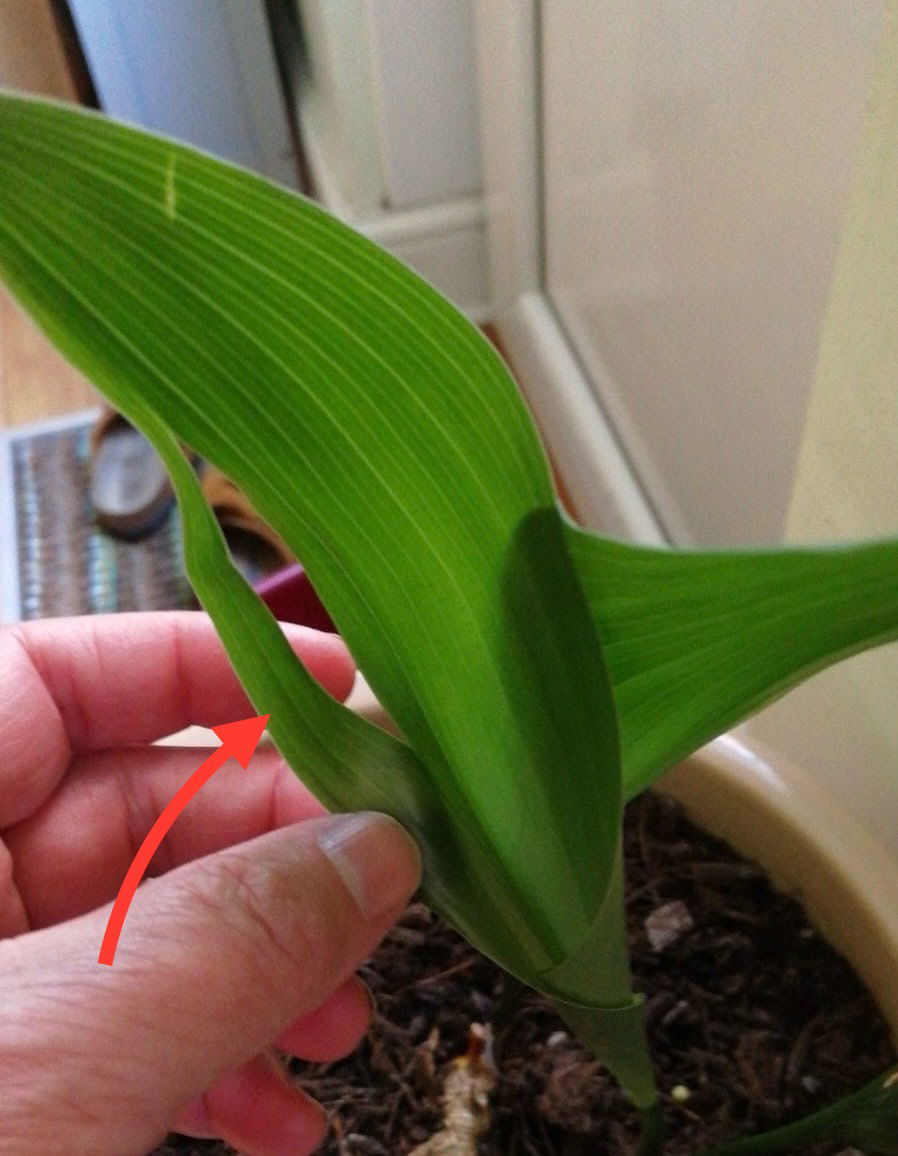 Damage during the leaf's juvenile stage is usually what causes it to split, but won't pose any risk to the plant's heath. Keep the leaf attached unless it beings to yellow over.
Persistent droughts will result in crispy brown sections across its foliage. Allow the affected leaf to thoroughly brown over before removing it with a clean pair of scissors, as puncturing the soft tissue may cause bacterial diseases further down the line. Introduce a watering schedule or pebble tray to avoid the risk of dehydration in the future.
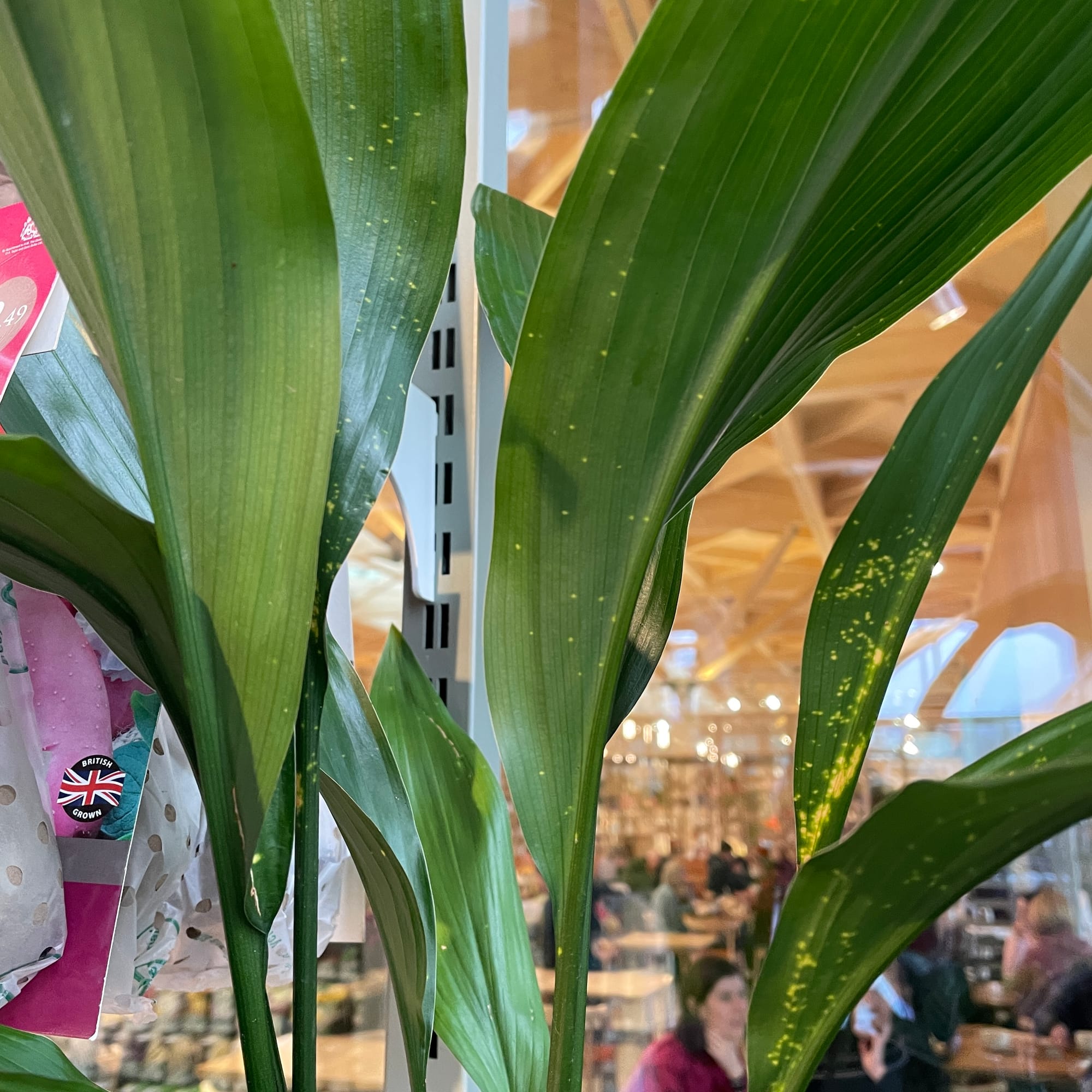
Yellow leaf spots on your Aspidistra can be a case of disease or pests. If it is a disease, the only way to address this is by repotting the plant & ensuring it's fertilised once every third water to improve its strength to overcome the illness. For issues of pests, (most likely Scale, Spider Mites or Thrips), click on this link to learn more about eradication these critters.
A loss of variegations is caused by too little light. Despite Aspidistra being an excellent choice for shady locations, it'll come at the cost of its variegations for multi-coloured specimens. Move the plant into a brighter area with minimal direct sunlight to allow the variegations to appear on the new growth. If you aren't entirely displeased about the loss, simply skip this step. Alternatively, extreme variegations that hinder the plant from developing chlorophyll (green pigmentation) is typically caused by too much sunlight.
Note: If your Aspidistra is none-variegated (i.e. just green), it'll be fine to grow up to 3m away from a window.
Spider Mites are small near-transparent critters that'll slowly extract the chlorophyll from of its foliage, leaving yellowed or brown marks. They are extremely common on Aspidistra, along with Thrips that can eventually spread to other nearby plants (up to 1m away). Have a check under the leaves, most notably along the midrib, for either pest and click on the corresponding link in this paragraph to learn about eradication.
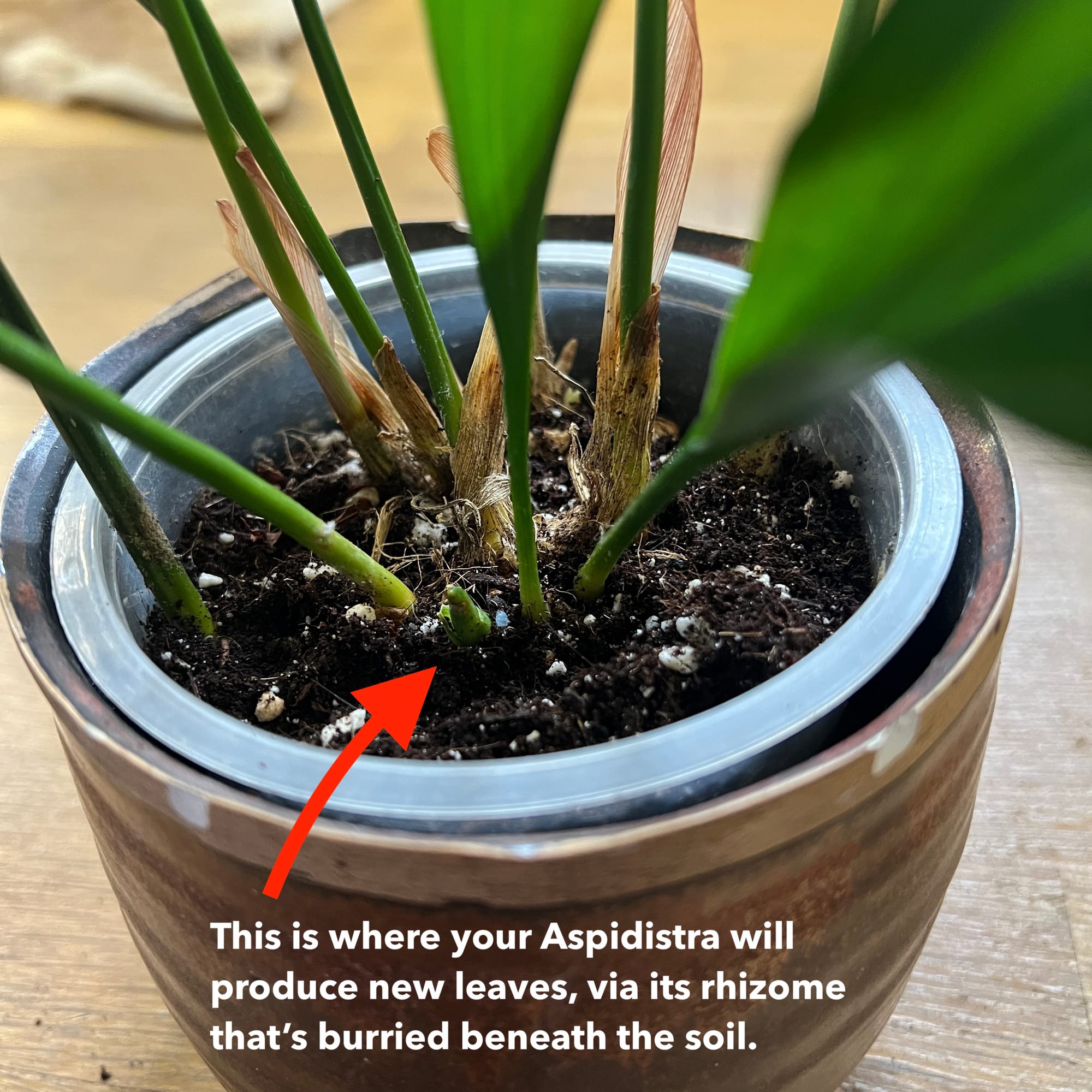
Aspidistra don't have traditional stems like most other houseplants. Instead, this species has a modified stem called 'rhizomes' that run just beneath the soil line, harbouring both its leaves and roots. Scroll down to 'Propagation' to learn more about how to take Aspidistra cuttings & to see a perfect example of one!
Origins
John Ker Gawler first described Aspidistra in 1822, using the Greek word for 'shield' (ασπίς) and the genus name of Tupistra, in reference to its foliar structure. Despite the initial taxonomy, it was largely ignored until the 1980s, when it was correctly placed from the Lilaceae family to Asparagaceae after morphological investigation.
During the age of gas-powered lighting in the Victorian period, toxic fumes and soot-covered surfaces were a frequent scene in homes, not only causing nausea and headaches, but also intoxicating most then-houseplants to death. The only two species that survived this challenging era were Kentia Palms and the newly discovered Aspidistra, which were only available to rich and affluent families during that time. Many family portraits during the 19th and early 20th century would feature either of these plants to essentially 'show off' their wealth and appreciation for artefacts from the New World.
There are two species of Aspidistra that may be in our homes today, the currently commercialised Aspidistra elatior, along with the lesser-known historic A. sichuanensis that sports thinner leaves compared to the former. It's rare to find the latter in houses now due to it not being saved via commerciality.
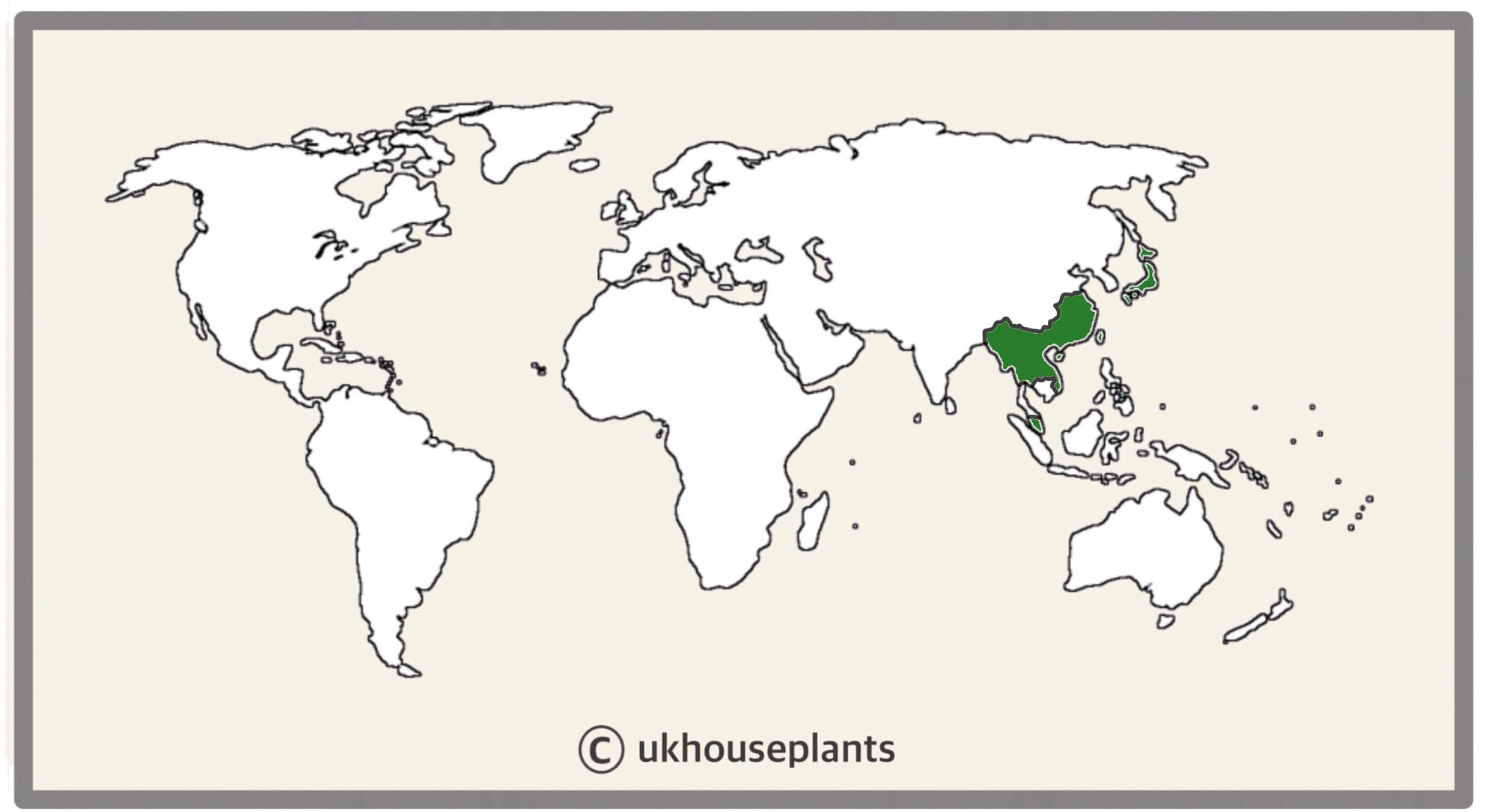 The Distribution of Aspidistra.
Temperature
-10° - 32°C (14° - 90°F)
H3 (Hardiness Zone 9) - Aspidistras can tolerate all temperatures between -5°C (23°F) and 32°C (90°F), making them a fantastic choice for cold windowsills, unheated conservatories or even porches. Just remember that the colder the ambient temperature, the less often you should water it (to avoid root rot). In rooms below 14°C (57°F), only rehydrate the plant's soil once it has become dry for around five days to avoid overly moist conditions.
Spread
Up to 0.6m in height and 1m in width, with the ultimate height taking between 2 - 6 years to achieve. Each rhizome can produce up to three new leaves per season in the right care, but are still considered a slow growing plant!
Pruning & Maintenance
Remove yellow or dying leaves, and plant debris to encourage better-growing conditions. While pruning, always use clean utensils or shears to reduce the chance of bacterial and fungal diseases. Never cut through yellowed tissue as this may cause further damage in the likes of diseases or bacterial infections. Remember to make clean incisions as too-damaged wounds may shock the plant, causing weakened growth and a decline in health.
Propagation
Via Seed & Rhizome Cuttings.
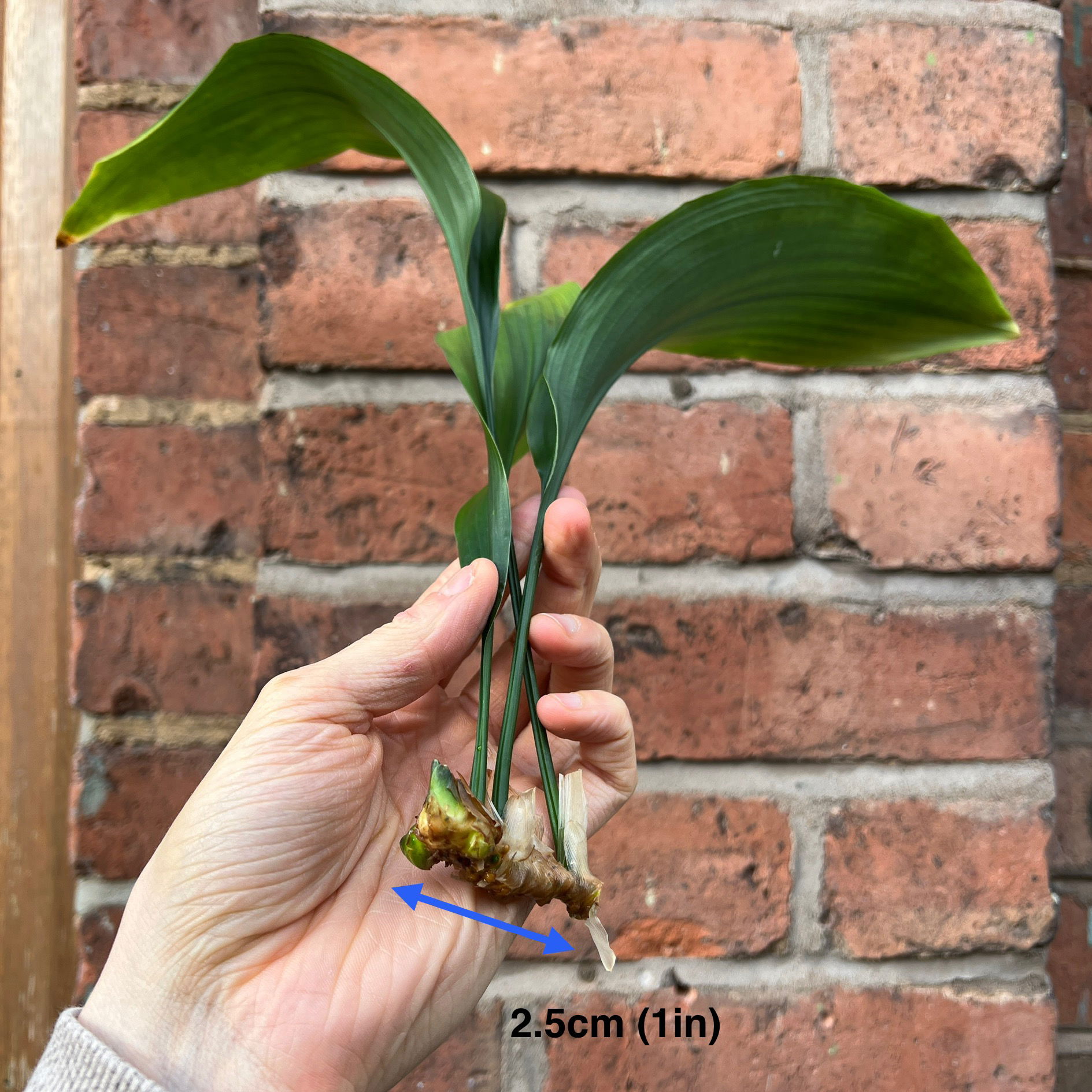
Rhizome Cuttings (Easy) - Choose the healthiest, most established rhizomes that show no signs of damage or disease - see the image below for a great example of an Aspidistra cutting. This method can be taken from spring to early summer, using between two to four fronds within each rhizomatous section. Cut directly below a node using a clean knife, and separate any roots from the rest of the root ball. Don't worry if yours doesn't have a root yet - these will develop with time.
Make sure the propagated rhizome is around 2-5cm (1-2in) in length so that it has enough stored energy to continue growing. Fill a10cm pot with 'Houseplant' labelled potting mix, before burying the rhizome around 2cm (1in) within the soil. Give the plant a thorough water and wrap the cutting (its foliage & pot) in a transparent shopping bag to lock-in the humidity needed for rooting. Place the bagged & potted cutting on a warm windowsills with temperatures over (18°C, 64°C) for quickest root growth. Keep the soil moist throughout the next two months before removing the bag and treating the plant like a mature specimen with the care tips mentioned throughout this article.
Flowers
Aspidistra are perennial, meaning that small purple rosette flowers will emerge around an inch above the soil line during the spring or summer. Its blooming process has baffled botanists for many years due to its low-growing nature, a complete contrast to the preferred height of ordinary flowers to attract airborne pollinators. If pollination is successful, small red berries will form in the flower's urn, usually holding just one or two seeds. It's possible that a domestically grown specimen will bloom indoors, with those being recently repotted in the mid winter having the best chance. The flowers are primarily pollinated by flying insects, most notably Fungus Gnats.
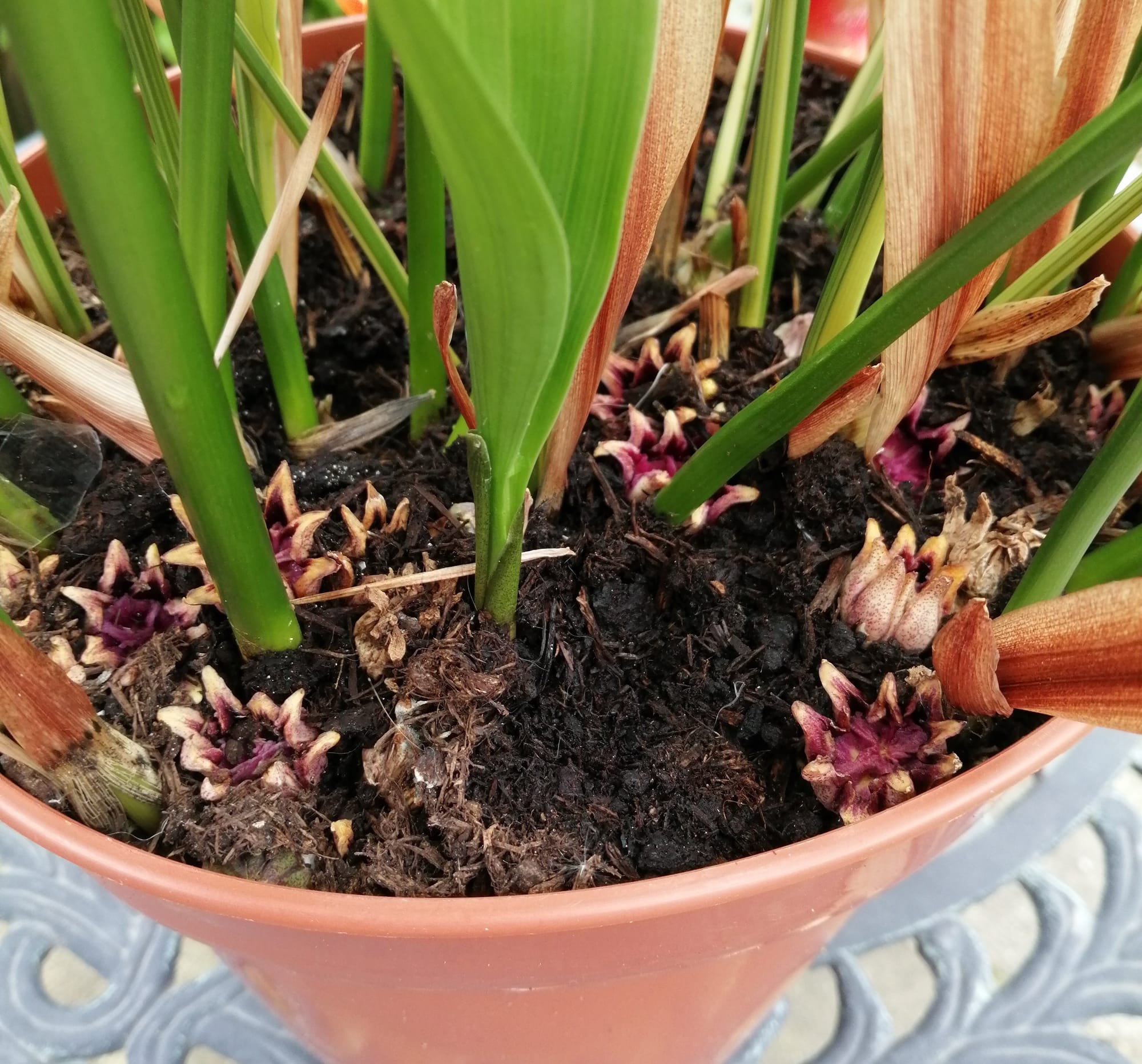 Credit: Melanie Elliott.
Repotting
Repot every three years in the spring, using a 'Houseplant' labelled compost and the next sized pot with adequate drainage holes below. We recommend purchasing a transparent orchid pot to provide better aeration around the root system, thus reducing the risk of root rot (common with Aspidistras). Instead, you can always re-use an old traditional plastic pot and melt holes in the side with a soldering iron (available to purchase at DIY stores or Amazon UK, etc). Have a look at the image below to understand the importance of good aeration in the soil, created by these holes.
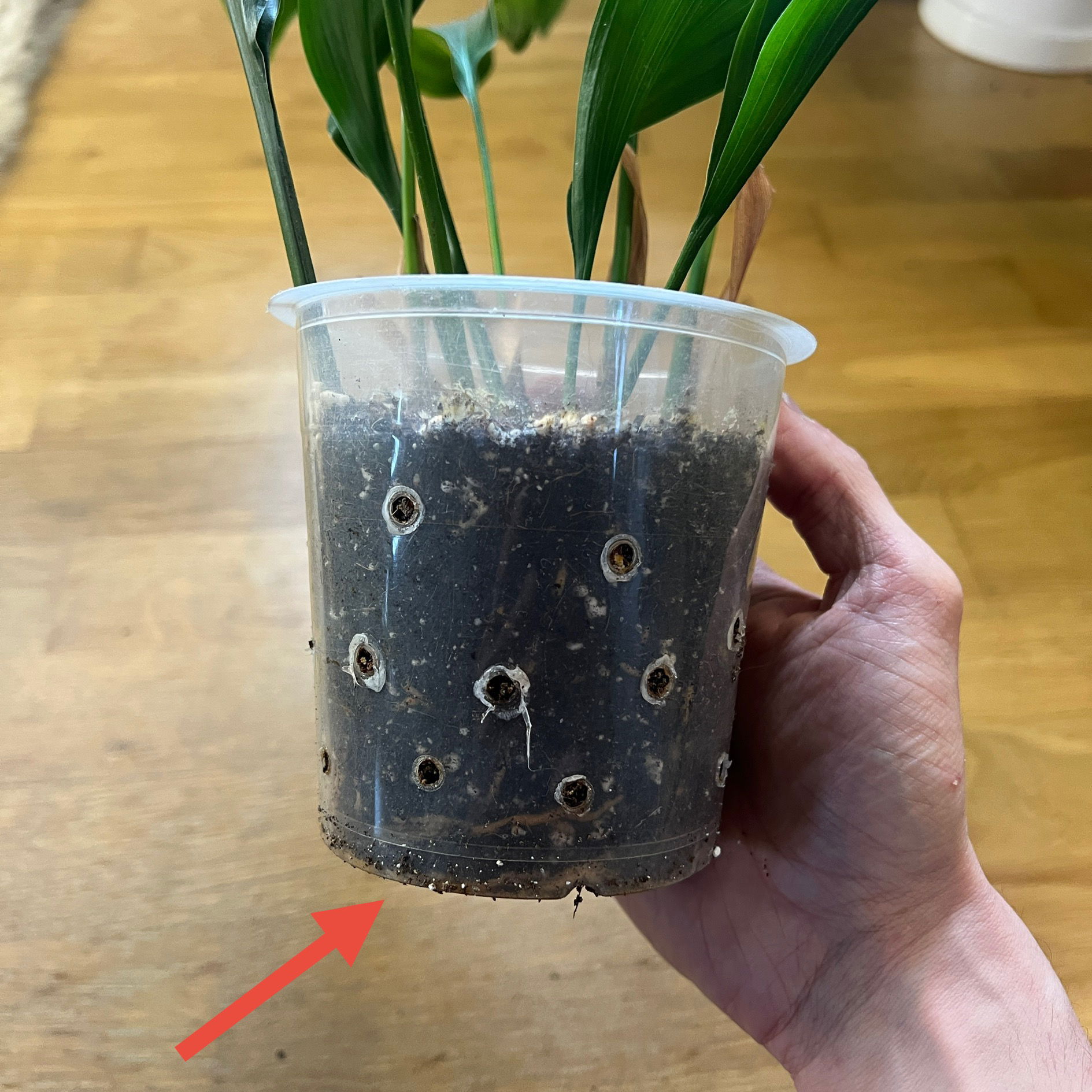
This is THE HOUSEPLANT DOCTOR's Aspidistra that's growing in an Orchid pot with holes melted in the side. This is the best way to avoid over-watering & root rot on your Cast Iron Plant, as the holes force air movement within the soil and root system. (You can create these wholes with either a pencil, or a soldering iron).
When it's time to repot, it's advised to hydrate the plant around 24hrs before tinkering with the roots to prevent the risk of transplant shock. Remember to treat the root system delicately by not pulling soil from the healthy roots.
If you'd like a personal guide to repotting your houseplant, book a 1-to-1 video call with THE HOUSEPLANT DOCTOR™. This will include recommending the right branded-compost and pot size, followed by a live video call whilst you transplant the specimen for step-by-step guidance and answer any further questions!
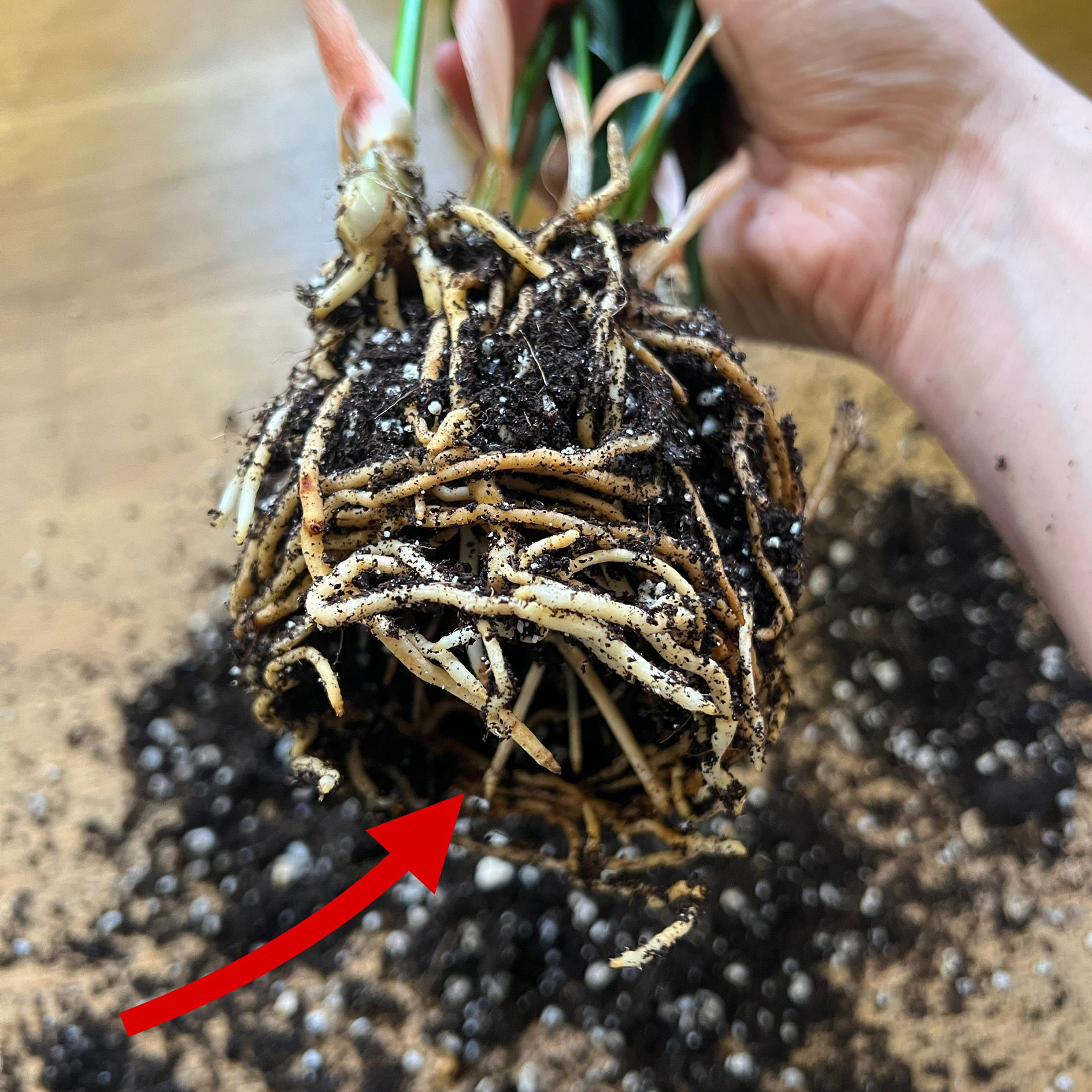
Here's an example of a healthy root system on an Aspidistra (Cast Iron Plant).A healthy root strand will have a pointy tip that's light coloured. To check for root rot, see if the plant has any brown, deflated roots (either at the tip or along the root itself). Rotted roots are also very easy to pull off from the soil when pinched.
How to Save Your Aspidistra from Root Rot
1. Check for root rot by removing the plant from the pot to inspect the roots. If the roots are brown and mushy, and the plant feels 'loose' and can be removed from the soil, you must act quickly.
2. Cut the leaf in half width ways to reduce its overall length by half. This will reduce moisture loss in the overall plant, so it can focus on rerooting & growing. Remove the plant from the soil and prune any rotten roots (healthy roots are cream coloured & plump).
3. Place the plant around a quarter deep into a fresh batch of 'Houseplant' potting mix, using a 7cm plastic pot. It's base (rhizome) must be covered by the soil.
4. Water the soil sparingly so that the soil is only a little moist.
5. Place the potted plant into a transparent bag (pot and foliage) and locate it in a warm windowsill.
6. Ensure the soil is slightly moist and check for new growth eventually. The plant should survive with fresh new growth in the roots and foliage after a few months.
Pests & Diseases
Keep an eye out for mealybugs, spider mites, scale, thrips, fungus gnats, vine weevils & root mealybugs that'll locate themselves in the cubbyholes and undersides of the leaves, with the exception of the latter two in the soil. Common diseases associated with Aspidistra are root rot (Sclerotium rolfsii), leaf-spot disease, botrytis, rust, Fusarium wilt, rhizoctonia, powdery mildew & southern blight - click here to learn more about these issues.
Toxicity
Not known to be poisonous by consumption of pets and humans. If high quantities are eaten, it may result in vomiting, nausea and a loss of appetite.
Retail Locations
Most likely to be sold on internet stores with rare appearances at Blue Diamond, British Garden Centres or Dobbies.
Variegated Cultivars (Just a few of them!)
'Lennon's Song' - The green-toned foliage is slashed with thin lime stripes across its leaves. Originally selected and grown by Florida-born Robin Lennon in California from his Aspidistra fields.
'Asahi' - A white-tipped variety with the typical Aspidistra green base, separated by a mottled infusion of the two colours.
'Okame' (syn. 'Variegata') - Very popular amongst growers in the late 20th century. Foliage has wider leaves than other variegated cultivars, littered with vertical white bands from tip to rhizome.
'Sekko-kan' - An older Japanese cultivar with thin white stripes across the top half of the leaf. When matured, some of the leaf-tips may entirely become white, similar to the 'Asahi' variety. This cultivar is sometimes nicknamed the 'White Snowy Crown' Aspidistra.
'Milky Way' & 'Well Spotted' - Within the 'Sichuanenis' group and therefore sport thinner leaves than each of the cultivars above ('Elatior' group). The foliage is covered in yellow spots across the leaf, with each mottle measuring around 0.3cm in diameter. 'Milky Way' is pictured below.
'Kinboshi' - Similar to the 'Milky Way', this variety has yellow mottles but with the bonus of a lime halo across each spot. The variegations tend to be more intense with this type.
'Stars & Stripes' - This is another yellow-spotted variety, except with this cultivar, there are lime stripes thrown across the leaf blade. Very rare to find in the U.K.
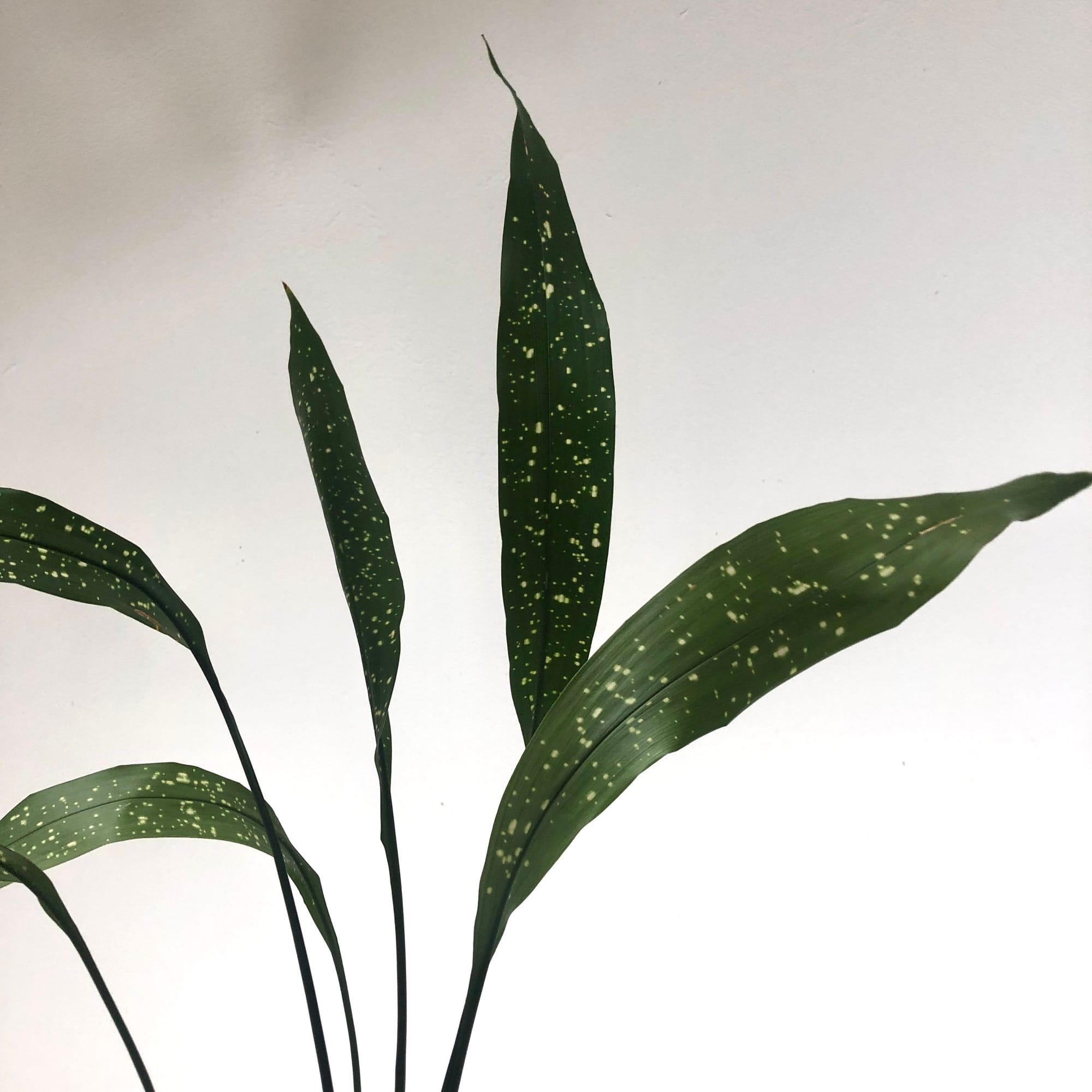
An example of Aspidistra elatior 'Milky Way'.
Book a 1-to-1 Call with THE HOUSEPLANT DOCTOR™
If you need further advice with your houseplants, book an advice call with ukhouseplants' friendly and expert writer today! This can be done via a video or audio call on most apps, including Facebook, FaceTime & Skype. A ten-minute call costs £5.99 (US$7), or £15.99 for thirty minutes. You can ask multiple questions, including queries on plants, pests, terrariums, repotting advice and anything in between. Please consider supporting this service to keep ukhouseplants thriving!
Comments